
Professional Wardrobe Strategy
-
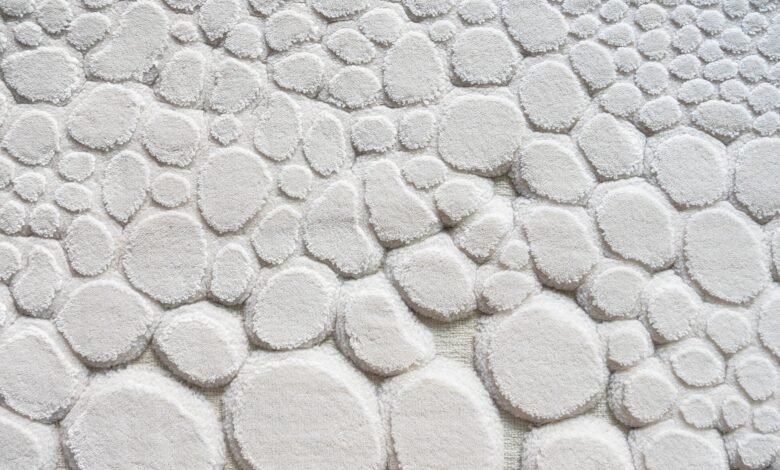
Why Does My Blazer Bubble and Lose Shape After a Humid Commute?
Those raised ripples at the chest and lapel after a sweaty commute are usually the lining glue lifting away from the shell, not simple wrinkles. The surface looks bubbled because the bond has separated, so steam alone will not make it lie flat again. Heat from your body, moisture from humid air, and pressure from a tote strap soften the…
Read More » -

Tailored Trouser Versatility Across Professional Dress Codes: Evaluating Cut, Fabric GSM, and Cost-Per-Wear
A tailored trouser only crosses professional dress codes when its cut holds a clean line and its fabric carries enough physical weight to sustain a pressed crease. A lightweight crepe that looks polished for casual Friday loses authority in a conservative boardroom because it drapes and clings instead of structuring the leg. Versatility is not about owning every silhouette, but…
Read More » -
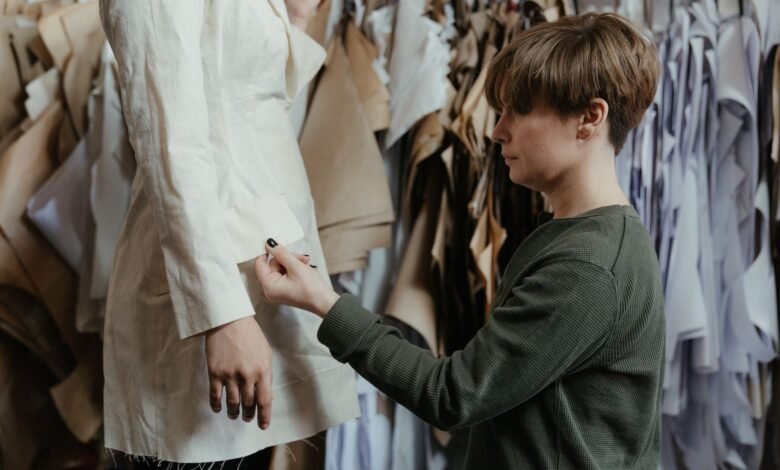
Why an Expensive Blazer Loses Its Shape: The Construction Signals That Determine Whether a Structured Blazer Pays Off
A blazer loses its shape when its interior is glued instead of stitched, so the chest bubbles, the lapel collapses, and ripples appear after a few cleanings. That glued layer is called fusing, and even at $600 it will separate if heat and wear break the adhesive bond. A fused front can look sharp off the rack and cost less…
Read More » -

The Promotion-Gap Wardrobe Audit: Measuring Whether Your Current Professional Dress Signals the Role You Are Pursuing
Your current professional wardrobe creates a promotion gap when it signals competence in your present role but not authority for the next one. That gap shows up as soft shoulders on blazers, low-contrast outfits that blend into the room, and fabrics that wrinkle or shine under meeting lights. Senior leadership reads these details in seconds as visual shorthand for scope…
Read More » -

Structured Dress Versus Blazer-Trouser Combination: A Cost-Per-Wear Comparison at Equivalent Price Points for Professional Women
At an identical $250 price point, a blazer-trouser set will almost always deliver lower cost-per-wear than a structured dress because you can wear each piece separately and together. A dress is one outfit per wear, while a suit is at least three — blazer + trousers, blazer alone, trousers alone — before you add anything else from your closet. There…
Read More » -

Wardrobe Selection Standards for Hybrid Work Schedules: Evaluating Professional Pieces Against Camera Performance and In-Person Formality
A hybrid wardrobe fails when a blazer looks polished in a conference room but turns shiny, striped, or washed out on camera. The fix is to grade every piece on two standards at once: how it holds structure in person and how its color, texture, and collar read in a 720p video window. Fabric sheen, knit stretch, and fused interlinings…
Read More » -

Why High-Cost Professional Pieces Often Fail to Work Together: Diagnosing Construction and Formality Mismatches
Your high-cost professional pieces fail to work together because their construction and formality levels contradict each other, not because you chose the wrong colors. A structured, fully-canvassed wool blazer speaks boardroom authority while a fluid silk shell and heavyweight ponte trouser belong to two different visual languages, and your eye reads that clash instantly. Most outfits collapse on weight, sheen,…
Read More » -
How to Identify an Interview-Ready Wardrobe Subset Within Pieces You Already Own
The interview-ready pieces already in your closet are the ones that hold structure, show no surface fatigue, and read neutral under bright light. You find them by filtering for fabric density, construction that keeps lapels and collars crisp, and fit that stays distraction-free when you move. A blazer that has carried you through a year of client meetings often carries…
Read More » -

Professional Dress-Code Standards in Law, Financial Services, and Technology: A Documented Benchmark for Women
In law, the documented standard for women remains a matched navy or charcoal wool suit with a high-coverage blouse and closed-toe pumps because juries read conformity as credibility. Finance keeps that suit but rewards seasonless wool and flawless grooming for client trust, while tech treats the suit as optional and prefers dark tailored separates with a knit blazer that signals…
Read More » -

How a Professional Wardrobe Audit Reveals the Gap Between Pieces You Own and Outfits You Can Actually Build
A professional wardrobe audit reveals that closet size and outfit options are barely correlated because most closets are stocked with pieces that cannot mechanically combine. The gap is structural, not numerical: you own twelve tops and eight bottoms in theory for ninety-six outfits, yet only nine actually work because undertone, fabric weight, and silhouette geometry block the rest. The tradeoff…
Read More »