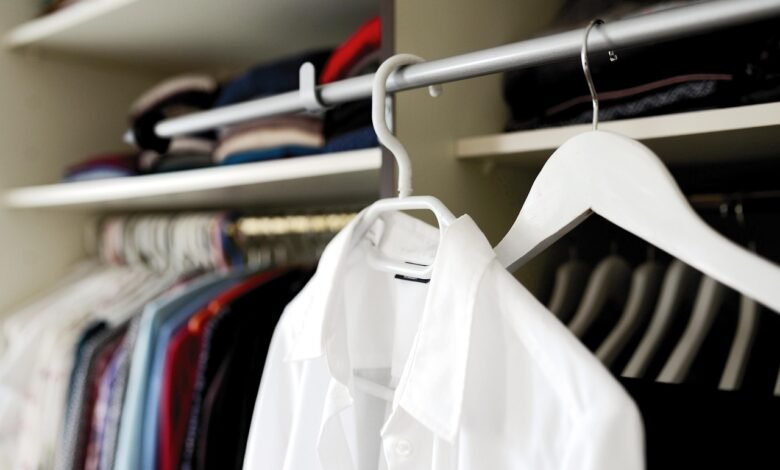
Paying more does not guarantee a wardrobe that lasts ten years, and a cheaper tee can outlast an expensive one. What predicts longer wear is measurable — how heavy the fabric is, how long its fibers are, and how its seams are finished — not the brand story. Those physical signals control pilling, stretching, and seam failure, which is why two cotton tees that look identical on the rack can age very differently.
Heavier jersey resists show-through but can trap heat, and testing 47 tees in price not reliable guide to durability work found six of the most durable cost less than £15, so price alone fails. Once you know three signals to check in store — weight, fiber feel, and seam finish — how to build a wardrobe that lasts 10 years comes down to seconds of checking, and the calculator at the end shows when buying less saves money.
What actually makes a wardrobe last ten years?
This wardrobe is about everyday cotton tops, poplin bottoms, and midweight outerwear you rotate for work and weekend, from budget to mid-range. Longevity is not about neutral colors alone. It is about physical durability — fiber, fabric weight, construction, and how often you wear it.
University of Leeds Institute of Textiles and Colour with WRAP tested 47 t-shirts sold in the UK and found price has very little to do with durability — spending more does not guarantee more hard-wearing. The most expensive £395 tee ranked 28th out of 47 while a £4 tee placed 15th, and six of ten most durable cost less than £15 outperforming more expensive options.
That matters for building a long lasting wardrobe. If price fails as a proxy, you need measurable signals instead. The WRAP Clothing Longevity Protocol and its Durability Research Project with Leeds provide an industry framework that treats durability as design choice, not marketing claim. It is the same logic you can apply in store.
Table comparing price vs durability — what low price and high price both miss — and what measurable signals predict instead
Price tells you about branding and retail overhead. Fabric weight, staple length, and seam finish tell you about abrasion resistance and dimensional stability, which is what keeps a garment wearable for ten years.
Why fabric weight predicts wear more than price tag
Fabric weight is measured as mass per area. The ASTM D3776 mass per unit area standard defines the method, and the fabric weight standard covers measurement applicable to most fabrics including four options for full width and small swatch.
For a ten-year wardrobe, weight relates to opacity and seam stress. Lighter jersey around 150 GSM can feel cool but may show underarm seams and stretch at the shoulder under daily wear. Midweight around 180 to 200 GSM balances cover and breathability for tops you wear weekly. Heavyweight around 300 GSM and above resists show-through but can trap heat indoors, so it suits outer layers or winter tops rather than year-round tees.
These bands are not industry thresholds. This GSM banding is a self-authored practical evaluation tool built from above mechanisms for in-store use, not a published industry standard. Use it as a quick filter: does this category’s weight fit its job in your rotation?
To compare candidates, you can check a brand’s published weight and feel the fabric. Kotn 150 GSM easy crew is listed as 30/1 jersey at 150 GSM, Kotn long-staple Egyptian cotton 195 GSM as 195 GSM, and Patagonia midweight pocket tee as midweight solid-knit jersey built to be a staple for long-lasting wear. Examining the label reveals what the brand states, not an independent test, so pair it with seam and fiber checks.
Interactive GSM slider — drag from 150 to 350 GSM to see estimated opacity, seam stress, and drape change
If the jersey feels see-through when you stretch it lightly at the chest, weight is too low for that job. If it feels stiff and traps heat at the neck, weight may be too high for daily wear.
How fiber composition and staple length change how clothes age
Weight shows how much fabric there is, but fiber tells you how it ages. Higher twist, longer staple fibers and balanced weave structures can increase abrasion resistance and dimensional stability, which may support longer usable life when paired with intentional wear rotation.
Long-staple cotton means each fiber is longer. long-staple cotton superior yarn quality comes from longer upper half mean length and higher uniformity, which provides superior yarn quality because fewer fiber ends stick out. Short-staple cotton has more ends per inch, so pills start faster under arm friction.
Twist locks fibers in place. Research shows yarn twist improves abrasion resistance from 2.1 to 4.7 and pilling resistance from 2.7 to 4.5 when twist increases, because higher twist increases lateral pressure that anchors fibers. Too low twist leaves fibers loose to migrate to the surface; very high twist can make hand feel hard, so there is a trade-off between softness and anchoring.
Balanced weave resists inter-fiber slippage that causes shoulder roll and hem growth. If warp and weft are uneven, yarns slide under tension and the garment grows at the hem. If you see a murky grey with faint white specks at the knee after a few months, that surface dye sheath abrading and lighter core showing through explains why low twist and short staple age faster.
Interactive fiber-field simulation — adjust staple length, twist, and friction to see estimated pilling risk
Try this before you buy: pinch the jersey and rub lightly — if short fibers lift and halo quickly, staple is shorter and twist lower, expect earlier pilling
How to read construction quality in 30 seconds
Fiber explains yarn, but seams decide whether a top stays together for ten years. For a wardrobe that lasts 10 years, seam finish and stitch density matter as much as fabric weight.
Side-by-side brand specs show how same fiber serves different jobs. The manufacturer states Kotn long-staple Egyptian cotton 195 GSM is 100% long-staple Egyptian cotton at 195 GSM made with certified OEKO-TEX non-toxic dyes. Kotn 150 GSM easy crew is 100% Egyptian cotton 30/1 jersey at 150 GSM with the same dye certification. Patagonia midweight pocket tee is listed as midweight 100% Cotton in Conversion built to be a staple for long-lasting wear.
Check three details together. First, seam finish: flat-felled or bound edges enclose raw edges and resist fraying, while single overlock can open under wash stress. Second, stitches per inch: denser stitching at shoulder and side seam increases lateral pressure that locks yarns, so seam slippage is lower. Third, fabric weight for category: heavier-weight poplin from Eileen Fisher in organic cotton poplin has a smooth crisp weave that holds shape in trousers, while medium-weight organic cotton linen has a slubbier hand better for relaxed pants.
Each option has trade-offs. Lightweight 150 GSM jersey — pro: breathable and layers well, con: may show seams and need more frequent replacement if worn daily without rotation. Midweight 195 GSM long-staple — pro: better opacity and pilling resistance, con: warmer in high heat. Heavyweight 350 GSM cardboard jersey — pro: holds structure for years, con: heavy for summer and slower to dry.
If a tee uses short staple and single-needle overlock with low stitch density, that is a genuine reason to skip it for a ten-year slot even if the price is attractive, and a non-affiliate option with long staple and flat-felled seams is superior to an affiliate-priced tee with weaker construction.
This checklist is a practical evaluation tool created for this guide based on twist, density, and seam construction mechanisms described above, not a published industry standard. Use it as an in-store quick-check.
Checklist showing three construction details — fabric weight label, seam finish, and stitch density — with what each predicts for ten-year wear
At the shoulder seam, look for flat-felled or bound finish rather than single overlock, and stitches that feel dense not gapped when you stretch lightly
How to build a wardrobe that lasts 10 years without replacing everything at once
Construction tells you what to buy, but rotation tells you how to make it last. Start from an audit, not shopping.
List what you actually wear weekly, then count wears per piece. Wear frequency drives longevity — rotating reduces abrasion cycles per garment, so each piece rests and recovers. A slow fashion wardrobe essentials core might include approximately 2 heavyweight tops at 300 GSM and above, 3 midweight tops at 180 to 200 GSM, 2 heavier-weight bottoms in poplin or approximately 250 GSM cotton, and 1 structured outer layer. These numbers are estimates for planning, not a fixed rule.
Use a buying less but better filter: does this new piece increase the wears of existing pieces? If a heavyweight crew lets you wear three midweight tees more often by layering, its cost per wear drops. If a trend top only matches one bottom, its cost per wear stays high.
Intentional rotation also aligns with circularity guidance. WRAP notes durability must come first for circularity, because a garment that lasts longer needs replacing less often. Build from what you have, add one ten-year candidate per category at a time, and track wears in a notes app for a month to see real frequency.
When this guidance does not apply: occasion wear you need for one event, maternity, or rapid body changes. In those cases rental or secondhand may keep your ten-year core intact while covering short-term needs.
Flowchart from wardrobe audit through fabric weight and construction checks to cost-per-wear decision
How much will it really cost per wear over ten years?
Essentials list shows what to buy, but cost per wear shows true value. cost per wear calculated by dividing price by how long an item is likely to last can help recognize long-term value and discourage overconsumption of fast fashion low quality poorly made trend-led clothes.
University of Bath and Cambridge Judge Business School tested how cost per wear influences decisions across six online experiments and found labeling shifts preference toward higher quality longer lasting clothing, as described in the Bath cost per wear study six experiments. This is the research basis for the calculator below.
This calculator is a self-authored practical evaluation tool built from Bath logic, not a published industry standard. To estimate ten-year wears, use realistic rotation: tops approximately 120 wears over ten years, bottoms approximately 200 wears, outerwear approximately 300 wears with rotation. These are pipeline’s own planning estimates, not lab measurements — your actual count depends on climate, work dress code, and how many pieces you rotate.
Calculator showing price divided by estimated wears over ten years with breakeven point vs cheaper alternative
Before committing, estimate how many times you will realistically wear this in a year with rotation, multiply by 10, then divide price — if cost per wear is still above your threshold, skip
Why price alone fails as a durability signal
The mistake is treating higher price as guarantee of longer wear. It sounds reasonable because luxury branding and heavier packaging imply quality.
It fails because the Leeds WRAP data shows most expensive £395 t-shirt ranked 28th of 47, £4 placed 15th, and six of ten most durable cost less than £15. Price reflects many costs unrelated to fiber length or twist.
Correct practice is to check fabric weight per ASTM D3776, fiber staple and twist feel, and seam finish, not price tag. That check takes approximately 30 seconds in store and predicts pilling and seam opening better than price.
Where certifications actually help you buy less but better
Cost per wear shows math, but certifications verify sourcing claims you cannot see by touch.
GOTS comprehensive sustainability standard is a comprehensive sustainability standard for textiles made from organically produced natural fibres evaluating entire supply chain including ecological and social criteria. It requires at least 70% organic fibers and covers processing, manufacturing, packaging, labeling, trading, and distribution — it verifies organic origin and chain, not durability.
OEKO-TEX Standard 100 is a product testing and certification standard that assesses textiles for harmful substances and tests 100+ substances in finished product, any fiber type. It verifies safety screening, not seam strength or how long a garment lasts.
For a wardrobe that lasts 10 years, use GOTS where organic fiber origin and processing matter for slow fashion wardrobe essentials, and OEKO-TEX where skin-contact safety screening matters. Check the certificate number on the product page, not just the logo, because a logo without a number cannot be traced.
Table comparing GOTS and OEKO-TEX Standard 100 — fiber requirement, focus, testing stage, supply chain coverage
How wash, wear rotation, and repair keep a ten-year wardrobe alive
Certifications verify sourcing, but wash and rotation keep clothes wearable. Long-term ownership reality is that wash frequency, temperature, and rest between wears change dimensional stability and pilling more than any single purchase decision.
Cold wash and air dry preserve fiber twist and GSM. Hot wash and tumble dry high heat can cause irreversible shrinkage and color loss in organic cotton because heat accelerates fiber swelling and dye loss. If you need to sanitize, use lower heat and shorter time, and check the garment’s own care label rather than guessing.
Wear rotation allows knit recovery. If a cotton tee is worn two days in a row, the shoulder and hem may stretch and not bounce back fully. With approximately 3 to 4 days rest between wears, fibers relax and seams recover, so growth at hem is lower over months.
Repair extends life when damage is localized. For related guidance on when stitching, patching, or replacing makes more sense, see our guide on when it is worth repairing clothes versus replacing them. That decision matrix is a natural next read after building a ten-year wardrobe because rotation alone does not prevent eventual damage. Follow WRAP Textiles 2030 durability best practice guidance that positions durability as first step for circularity.
Three stages of a cotton tee — new, after 10 washes with rotation, after 50 washes without rotation — showing pilling and hem growth difference
The buying less but better filter for every new piece
Wash and rotation explain care, but a filter decides what enters the wardrobe in the first place.
Ask three questions for every new piece. First, does fabric meet GSM and staple check for its category — for example, does this midweight tee sit near 180 to 200 GSM with long staple feel, not light and fuzzy? Second, does construction meet seam finish and stitch density check — flat-felled or bound, dense stitching at shoulder? Third, does it lower cost-per-wear of the existing wardrobe over ten years when you calculate price divided by realistic wears?
Slow fashion wardrobe essentials are not about minimalism. They are about intentional addition — each new piece should make at least two existing pieces more wearable, which keeps total count low while wear count stays high.
When this guidance does not apply: trend-driven occasion wear you may wear approximately 20 times over 3 years versus foundation pieces worn approximately 120 times over 10 years, maternity, or rapid body changes. In those cases rental or secondhand may be better than buying for a ten-year slot.
Checklist of three filters — fabric weight and staple, construction quality, ten-year cost-per-wear — for quality over quantity wardrobe
The last check
Price alone does not predict ten years because measurable signals do — fabric weight per ASTM D3776, long staple and higher twist for abrasion and pilling resistance, and seam finish that locks yarns. Before you buy, pinch for staple halo, check weight for category, and look at shoulder seam finish. Skip pieces that fail those three checks and your cost-per-wear drops over ten years; keep buying on price or logo alone and you replace the same category every season.
Frequently asked questions
Is a higher price a guarantee that clothes will last ten years?
No. University of Leeds testing found price not reliable guide to durability — most expensive £395 ranked 28th of 47. Check ASTM D3776 weight, staple, twist, and seam finish instead of price tag.
How do I know if a heavyweight cotton tee is actually better for a ten-year wardrobe?
Heavyweight alone is not automatically better. Same fiber at Kotn 150 GSM easy crew and Kotn 195 GSM turtleneck serves different rotation slots, so check weight plus staple and seam finish. Bands are practical guidelines, not industry thresholds.
Does building a slow fashion wardrobe mean I have to stop buying trend pieces completely?
No. Use cost per wear Bath logic — divide price by realistic wears. A trend piece worn approximately 20 times over 3 years has higher cost per wear than foundation worn approximately 120 times over 10 years. Rental or secondhand can keep your ten-year core intact.
What if I already own mostly fast fashion — can I still build a wardrobe that lasts?
Yes. Start with audit and rotation, not purge. Bath cost per wear shifts preference toward longer lasting even when starting from fast fashion. Keep pieces that pass weight and seam checks and add one ten-year candidate at a time per category.