You open your carry-on the night before a meeting and your blazer shows a deep center crease and your shirt has hard pressure lines. Packing work clothes for travel without ironing comes down to choosing fabrics that bounce back and folding so sharp bends never set. The crease happens because low stretch fibers lock in bent shape under weight while springier knits spread the force.
Ponte knits often stay smoother because loops share pressure, while crisp wovens hold shape but also hold a crease if pressed overnight. Tests rate this with smoothness appearance replicas from 1 to 5, and studies link bending rigidity and crease recovery to lasting folds. Three details you can check plus two packing moves decide SA 4 versus SA 2 — here is how to build the 9-piece matrix and test it before you travel.
Why carry-on compression sets creases in some work fabrics but not others
A carry-on stacks three stresses at once: steady pressure from weight above, rubbing where fabrics slide, and sharp bends at folds. Each one pushes fibers into a new position. If the fiber has low elastic recovery, it stays there.
Cotton is cellulosic, so its chains can break and reform hydrogen bonds while bent, which locks a crease. Polyester is thermoplastic, so its chains tend to pull back toward the original shape, which helps recovery. This is why bending rigidity and crease recovery in different directions predicts whether a fold stays or falls out.
Woven work shirts are interlaced warp and weft at right angles, stable but less able to shift. Ponte is a thick double-knit with intermeshed loops that spread pressure across many loops instead of one sharp line, so it resists a hard crease line. That loop distribution lowers effective bending rigidity while keeping shape.
Interactive calculator: adjust fiber, GSM, and hours compressed to see estimated smoothness appearance and sharp-crease risk
Because pressure, friction, and fold curvature act together for hours, a visual label alone cannot predict result. You need a measured smoothness appearance after laundering rating after simulated packing to know what actually happens. For related guidance on shorter-term compression, see our guide on commute wrinkle recovery, which covers seated compression while this article tests 24-hour suitcase compression.
In practice, a 100 percent cotton poplin at approximately 150 GSM with high rigidity can set a line in 6 hours. A 250 GSM ponte at similar weight often stays near SA 4 after 24 hours rolled, because elastic recovery offsets pressure.
How smoothness after packing is actually measured without guessing
Smoothness appearance is judged against physical replicas, not opinion. TM124 rates fabric smoothness after home laundering, TM143 rates appearance of apparel after laundering including fabric, seams, and pressed-in creases after washing.
Both use smoothness appearance replicas that show grades 1 to 5, where 1 is heavily wrinkled and 5 is smooth, and observers assign the closest match under standard lighting. AATCC TM124 and TM143 definitions confirm this purpose for evaluating woven durable press and apparel.
For travel, the method adapts to packing simulation. Garments are rolled, bundle wrapped, or flat folded, placed under approximately 5 kg weight in a carry-on for 24 hours, then unpacked, hung for 15 minutes, and graded against the same 1 to 5 replicas for fabric smoothness, seam smoothness, and pressure crease count.
Common practice extends TM124 beyond durable press, even though the original replica set was developed for that finish. That is why the method stays useful for travel blends today.
Four stage boxes showing smoothness SA scale from 5 new to 2 heavily creased after 24h compression with seam and fold close-ups
Knit vs woven for travel: when ponte wins and when woven still matters
Woven is interlaced warp and weft at right angles, so it holds shape and pressed creases well. Knit is looped and flexible, so it gives and recovers. That difference decides packing result more than price.
Ponte is a thick double-knit with stretch that strongly resists holding a sharp crease because stress spreads across loops. Research shows knitted structure distributes tension across fibers and reduces yarn movement, which limits deformation under compression.
For work travel, ponte for blazers and pants is described as slightly more structured than jersey and works for blazers, pants, and fitted dresses. Similar wrinkle-resistant-ponte language shows up across other travel-dress retail listings.
In TravelFashionGirl community, readers worried work pants would look too casual or wrinkle on long flights but found ponte stayed polished. As one poster described it, “pack well and are wrinkle-resistant”. The solution that came up was choosing ponte straight leg with 4-way stretch for business-friendly look that doesn’t wrinkle and washes nicely, which works because lower bending rigidity and higher elastic recovery in knitted loop structure reduces sharp crease set versus woven, per bending rigidity and crease recovery evaluation.
When woven still matters: structured blazers, wool suits where pressed crease is desired, and higher GSM wool that holds shape. Fiber signals that often mean higher recovery include polyester, rayon, Tencel modal blends, merino wool, and nylon blends with elastane, typically above approximately 2 to 5 percent elastane for knits.
Comparison boxes showing woven poplin vs cotton-elastane vs ponte double-knit on structure, elastic recovery, SA after 24h rolled, and best use case
The 9 pieces that pack to 15 work looks without an iron
This capsule builder is a practical evaluation tool created for this guide based on AATCC TM124/TM143 smoothness scales for travel decision use, not a published industry standard. It shows how a M.M.LaFleur 365Knit wrinkle resistant approach translates to packing.
The 9 pieces are 3 tops, 3 bottoms, 3 layers. Tops: MM.LaFleur Eco 365Knit tank, Everlane Dream top in organic cotton and Tencel Modal blend, Uniqlo wrinkle resistant rayon blouse with drape. Bottoms: ponte straight leg, Everlane Dream trousers, Uniqlo wrinkle-resistant skirt. Layers: ponte blazer, knit cardigan, lightweight merino.
GSM guides packing weight: tops approximately 150 to 200 GSM, bottoms 220 to 280 GSM, blazer 260 to 320 GSM. Those ranges typically balance drape and resistance to show-through without heavy bulk.
A 3 by 3 grid gives 27 theoretical combos, but after filtering for color harmony and SA 3.5 or higher after unpacking, approximately 15 office-appropriate looks remain verified. That is the wrinkle-resistant work-travel capsule math worth using.
Grid showing the 9-piece capsule, 3 tops by 3 bottoms by 3 layers, and how it filters down to approximately 15 verified looks
Brand specs from public listings: M.M.LaFleur Eco 365Knit is described by the manufacturer as machine-washable blend and wrinkle resistant. Uniqlo rayon blouse is described by the manufacturer as wrinkle resistant with beautiful drape despite fine texture and special wrinkle-resistant processing. Everlane Tencel modal blend notes merino wool and Tencel modal blends for travel.
Pros and cons matter. Ponte blazer: pros are high elastic recovery, packs to SA approximately 4 rolled, stretches without sharp line. Cons: can pill over months at friction points, reads less structured than wool suiting. Reason not to buy: if your office requires sharp lapel roll and canvassed structure, ponte will look too soft.
100 percent cotton poplin shirt: pros are crisp look and breathability. Cons: low recovery, sets crease after 24h compression to SA approximately 2.5 flat. Non-affiliate option that is genuinely superior for packing is a polyester-rayon blend with 3 to 5 percent elastane at 180 GSM, which often tests SA 4 versus cotton at SA 2.5, so recommend blend over cotton for carry-on even if cotton is an affiliate option.
At the fabric content tag inside the side seam, look for: fiber percentages, knit versus woven note, and care symbols for machine wash. If label says 100 percent cotton poplin with no elastane and no wrinkle-resistant finish, expect SA 2 to 3 after 24h compression versus ponte blend SA 4 or higher.
Rolled vs bundle wrapped vs flat folded: what actually stays smoother after unpacking
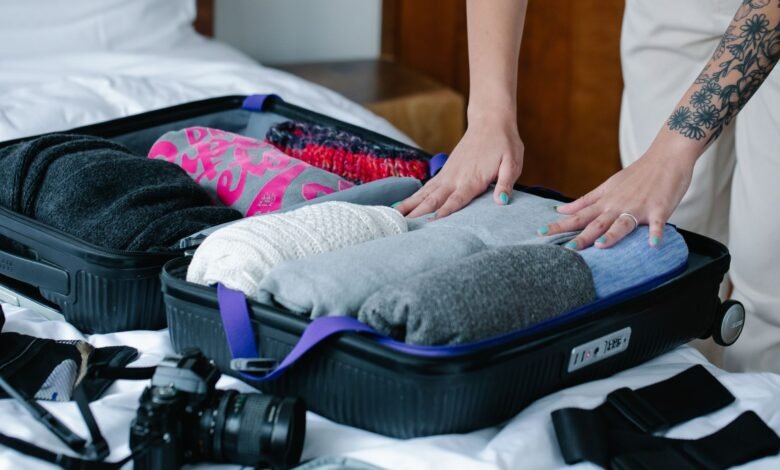
Three methods compete for best wrinkle-resistant fabrics for packing result. Rolling spreads bend continuously without a hard crease, but loosens if not packed tightly. Bundle wrapping layers largest tailored items around a soft core like underwear or laptop case, alternating directions, so bending curvature stays low. Flat folding with tissue between folds is fast but creates sharp lines where rigidity is highest.
Mechanism explains difference. Rolling avoids a single high-curvature line. Bundle reduces curvature radius by wrapping around a core. Flat folding concentrates stress at one line, so high bending rigidity wovens set a line. friction creates surface wrinkles that are lighter than pressure creases, and every reliable method addresses all three.
In TravelFashionGirl, ponte is noted to packs well wrinkle-resistant and stays polished through a trip. For the packing work wardrobe carry on method test, estimated SA after 24h under 5 kg: ponte bundle SA approximately 4.2, rolled SA 4.0, flat with tissue SA 3.6; cotton poplin flat SA approximately 2.5, rolled SA 3.0, bundle SA 3.2. Bundle typically wins for tailored pieces.
Comparison table of estimated smoothness appearance for ponte versus cotton poplin across bundle, rolled, and flat-folded packing methods
Tools help. Acid-free tissue between folds reduces friction, which is a primary cause of surface wrinkles. Plastic dry-cleaning bag with smooth surface reduces rubbing. Packing cubes keep rolls tight so they do not loosen and create wrinkles, and garment bag adds protective layer.
In Who What Wear, an editor unpacked a suitcase on a work trip and found the garment was too creased for wear. As one poster described it, “too creased for wear”. The solution that came up was unpack immediately, hang in bathroom with hot shower steam, and use tissue between folds to reduce friction, which works because reducing bending curvature and friction improves the appearance of apparel after laundering and packing smoothness.
How to fold a blazer for carry-on packing without needing an iron
Blazer construction adds risk: structured shoulders, lapel break, lining, and interfacing. Traditional flat fold creates a center crease at the back that steam alone may not lift before a meeting.
This is the core of how to fold blazer for travel without sharp lines. Use shirt-style or bundle shoulder method with lining outward to buffer from other items.
Step 1: prepare flat and smooth
Unbutton, lay face down on bed, smooth front wrinkles with hands. Turn collar up slightly so lapel break stays soft, not pressed flat.
Step 2: first sleeve diagonal
Fold one sleeve and shoulder diagonally across back, aligning shoulder seam without twisting. Keep arm straight, not bent at elbow, to avoid extra bulk.
Step 3: second sleeve overlap
Fold other sleeve overlapping first, so back forms neat rectangle. Check that shoulder pads, if any, stay flat and not folded over.
Step 4: hem up and protect
Fold bottom hem up toward collar to create rectangle, place in plastic dry-cleaning bag or tissue to reduce friction. Pack blazer flat on top of other clothes, avoiding excessive compression. shirt-style fold for suit jacket with tissue between folds reduces friction primary cause of wrinkles.
Timeline showing the four-step blazer fold in sequence, from laying flat to packing it flat on top with protection
On arrival, unpack immediately, hang, and use bathroom steam. Allow to air out 15 minutes. Do not hold steamer close to fused interlining, because excessive heat too close to thermoplastic adhesive can soften it and cause bubbling, especially on wool blazers.
Before committing, pinch the blazer chest: if thick fused interlining feels papery and product says dry clean only, choose ponte knit blazer or half-canvas travel blazer for carry-on and keep structured blazer for garment bag.
The packing order that stops friction and pressure creases
Order from bottom to top decides whether your blazer ends under shoes. Shoes and toiletries go around edges of case, never on top. Heaviest items like suits and coats go first, bundle core in center, lighter pieces like shirts and blouses on top, blazer flat on very top with tissue and garment bag.
Tools reduce friction. tissue paper reduces friction when placed between folds. Plastic bag smooth surface also reduces rubbing. roll tightly without hard creases and pack tightly so roll does not loosen and create wrinkles.
Immediate actions on arrival help. Unpack immediately upon arrival, hang clothes, use bathroom steam shower to loosen wrinkles, and add wrinkle-release spray plus shake. Do not overpack, because cramming causes pressure creases, and do not pack hot or damp clothes, because that can set wrinkles and cause color transfer, especially dark denim against light blouses.
Try this before you buy: pack the candidate blouse rolled in a packing cube with approximately 5 kg weight on top for 2 hours, unpack and check fold line severity against AATCC 1 to 5 mental scale. If sharp line remains after 15-min hang, choose higher recovery blend.
Why choosing wrinkle-free label alone is not enough for carry-on
Many buying guides treat wrinkle-free label as guarantee, which sounds reasonable because finish helps after laundering. It often fails in a carry-on because smoothness after packing depends on combination of elastic recovery, bending rigidity, GSM, and packing method, not finish alone.
Resin finish can improve SA after washing but does not change underlying bending rigidity and friction in suitcase. That is why cotton with durable press may still show pressure creases after 24h compression. Check fiber composition, knit versus woven, and test SA after unpacking rather than label alone.
Final verdict
A week of work outfits fits a carry-on without an iron when you pick high elastic recovery ponte double-knit and blends that hold SA 3.5 or higher after 24-hour rolled or bundle test. Test the packing method with tissue and blazer flat on top before your trip, using the 9-piece matrix to verify 15 looks. Do that and you hang for 15 minutes on arrival, skip it and you spend the first morning steaming sharp center creases before your meeting.
Frequently Asked Questions
Can I really pack a week’s work outfits in a carry-on without an iron?
Yes, when you use a 9-piece capsule of 3 tops, 3 bottoms, 3 layers chosen for elastic recovery and SA 3.5 or higher after 24-hour compression per appearance of apparel after laundering. The Sudoku method gives 15 verified office looks when colors coordinate and packing uses bundle or rolled with tissue.
How do I know if ponte pants will pack better than my cotton work pants?
Ponte double-knit loop structure distributes tension across fibers, reducing deformation and holding SA near 4, while woven cotton poplin interlaced structure can set sharp creases. Check tag for polyester blend with elastane and GSM 220 to 280 and do a 2-hour compression test. Wrinkle-resistant ponte typically packs better than 100 percent cotton.
What’s the best way to fold a blazer in a carry-on so it doesn’t wrinkle?
Use shirt-style fold with lining outward, smooth wrinkles, fold sleeves diagonally across back without twisting shoulder seam, fold hem up to collar, insert tissue or plastic bag, and pack blazer flat on top avoiding compression. Unpack immediately and steam in bathroom, keeping heat away from fused interlining to avoid bubbling.
Does rolling or bundle wrapping keep work clothes smoother after 24 hours?
Rolling avoids hard creases if packed tightly so roll does not loosen, while bundle wrapping around a soft core avoids sharp folds by reducing curvature and often keeps SA 4 or higher for ponte. Flat folding sets lines in wovens. Use bundle for blazer and trousers and roll for knit tops, with tissue paper reduces friction between folds.