No, a higher micron count and heavier fabric weight do not automatically make a merino shirt last longer, though both influence how it fails. A thicker fiber (19-21.5 micron) resists abrasion better than superfine 15-17.5 micron, and a heavier fabric means more material to wear through before thinning, but construction determines whether the shirt pills or splits at seams. Durability comes from how fiber, yarn twist, and cover lock together, not just diameter or weight.
That trade-off matters because superfine feels buttery but packs more fragile fiber ends per cross-section, so it pills faster at underarms and shoulder straps. Martindale abrasion testing on 150-260 GSM shirts consistently shows tight-twist, ring-spun ply outlasting heavy but loose knits by 60% or more — a gap you can feel by hand comparing two shirts of similar weight. Once you know what GSM actually measures and how micron changes fiber-tip density, you can spot a shirt built for five seasons rather than five washes.
What micron count and GSM actually measure
Micron is fiber diameter. Under 22 microns qualifies as merino for apparel. Most shirt-grade merino sits 17.5-21.5 microns. GSM is grams per square meter – density, not quality. A 150 GSM jersey has 40% less mass than a 250 GSM interlock, so there is simply less keratin to abrade before a hole forms.
Neither predicts abrasion alone. Lab durability is measured by Martindale rubs until failure. Micron changes bending rigidity and tip density, GSM changes mass to failure. Missing variables are cover factor (how fully yarns cover air gaps) and yarn spin type. A 180 GSM tight interlock at 19.5 micron can exceed 25,000 Martindale cycles, while a 220 GSM lofty single jersey at 17.5 micron can fail at 15,000 because its loose loops allow fiber migration.
Why finer fibers pill faster despite feeling softer
To spin the same yarn count, you need more superfine fibers. A 17.5 micron yarn packs roughly 20% more individual fibers per cross-section than a 21 micron yarn of identical weight. Every fiber has two ends. More fibers = more ends poking out.
Those ends are what pill. Under friction, surface fibers migrate out, entangle, then break at the base. Finer fibers have lower bending rigidity – 40-50% lower at 15-16.5 micron versus 21 micron – so they fatigue faster at elbows and seatbelt rub points. This is why mid-grade 19-21.5 micron is the standard mill choice for daily shirts: soft for 90% of wearers, but with enough cross-section to anchor.
Ring-spun versus rotor-spun
Ring-spun twists fibers continuously, trapping ends inside. Rotor-spun (open-end) has wrapper fibers and more protruding ends by design. An 18.5 micron ring-spun will outlast a 21 micron rotor-spun in pilling tests. If the product page does not state ring-spun, assume rotor-spun for cheap tees.
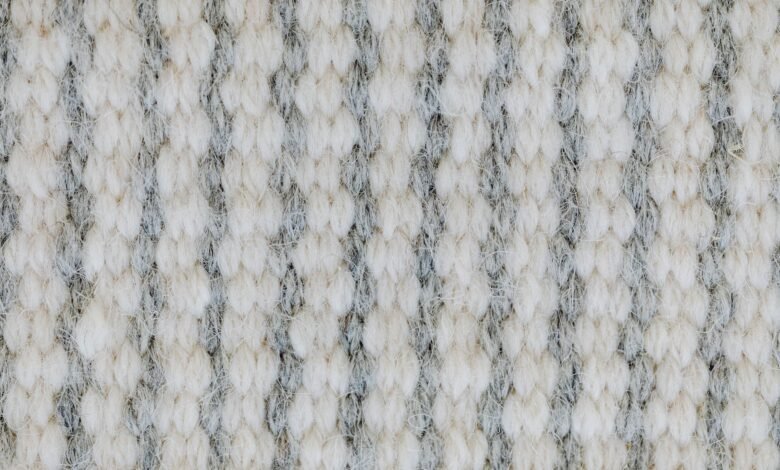
Visual comparison: 17.5 micron yarn packs more fine ends than 21.5 micron at same weight, increasing pilling propensity.
How GSM changes the failure mode from pilling to structural stress
At 130-170 GSM, failure is surface: not enough yarn mass to anchor fibers, so pilling starts early at underarms and sides. At 190-230 GSM, fibers are trapped better, so abrasion force transfers to yarn intersections and seams. That is why heavy shirts often thin at shoulders and collar first, not pill.
Construction type amplifies this. Woven merino (poplin, twill) interlaces at 90 degrees, locking fibers in a grid. A 170 GSM woven can outlast a 190 GSM jersey knit by a factor of two in shoulder abrasion. Interlock double-knit sits between: tighter than jersey, more stable than single. For longevity, prioritize woven or tight interlock over standard jersey at any micron.
The sweet spot for shirts that last
For everyday shirts, 19-21.5 micron paired with 180-230 GSM tight knit or 160-200 GSM woven hits the balance of softness and abrasion. Below 18.5 micron, you need 200-250+ GSM and high-twist to compensate. Above 22 micron, durability is high but prickle risk rises.
Checklist before buying: 1) Ring-spun and 2-ply if disclosed 2) Tight knit descriptors (interlock, double jersey) not just GSM 3) 19-21.5 micron for daily wear 4) Avoid silicone-softened superfine jerseys under 160 GSM.
The matrix below is a practical evaluation tool built for this guide from the fiber diameter, fabric density, and spin-type mechanisms explained above — it is not a published mill or lab standard, so use it as an in-store starting point rather than a certified spec.
Durability matrix showing interaction: mid-micron at mid-to-high GSM lasts longest for shirts.
What to check before buying your next merino shirt
Certifications like RWS or ZQ verify animal welfare, not abrasion. Instead, read construction: ring-spun, ply, interlock or woven, and micron/GSM pairing. Hold the fabric to light – if you see large air gaps at 180 GSM, cover factor is low and it will pill faster than a tighter 170 GSM. For slow fashion value, choose 19-21.5 micron, 180-230 GSM, tight knit, and you will double the wears before visible degradation versus a superfine lightweight jersey.
Frequently Asked Questions
Does lower micron always mean more pilling?
Yes, within same construction. Finer means more fiber ends per cross-section and lower bending rigidity, so ends migrate and break faster. Tighter twist and higher GSM can offset but not eliminate the gap.
Is 250 GSM always better than 180 GSM?
No. Up to 230 GSM, more mass helps abrasion. Past 260-280 GSM for a shirt, you add heat and sag without meaningful Martindale gain, and recovery suffers.
Woven versus jersey for longevity?
Woven traps fibers in a 90-degree grid and resists migration better. A 170 GSM woven often outlasts a 190 GSM jersey in shoulder abrasion.
Do certifications guarantee durability?
No. RWS and ZQ track welfare and traceability. They do not test pilling, abrasion, or seam strength.