
Capsule Wardrobe Planning
-

5 Capsule Wardrobe Mistakes That Quietly Cost You More Money
A capsule wardrobe quietly costs more when a piece either demands hidden companion purchases to become wearable, or its wear count collapses early from wash failure or aesthetic fatigue. Those two pathways explain why a small, intentional closet can end up more expensive than a fuller one, even when every tag feels justified at checkout. The math changes with context:…
Read More » -

Capsule Wardrobe vs. Minimalist Wardrobe: What’s Actually Different
A capsule wardrobe is a bounded system: a hard ceiling and a fixed reset date that forces a swap to add anything new. A minimalist wardrobe is an open system: no set number, just a continuous test of whether each piece still earns its place. If you cannot point to both a ceiling and a date, you are not running…
Read More » -

How to Measure the Professional-to-Casual Range of a Capsule Piece Using Dress Code Mapping and Outfit Count Verification
A capsule piece covers professional to casual settings only when its construction qualifies it for multiple dress codes, not because you can style it differently. If the hem shows thread outside, the seams expose serged loops, or the fabric sags by midday, the piece fails business formal and formal entirely, leaving it stuck in one or two contexts. Heavier cloth…
Read More » -

How to Run a Carry-Forward Audit on Your Capsule Before a Seasonal Transition to Prevent Outfit Combination Loss
A seasonal transition breaks outfit combinations when you pack away a bridging piece without counting how many outfits depended on it. A ponte blazer that quietly supported eight outfits costs you eight outfits when removed, not one — and that is how a 30-piece capsule feels thinner after a swap, even at the same piece count. The mechanism is the…
Read More » -

How to Evaluate Mid-Weight Knitwear as a Capsule Foundation Piece Using Fiber Composition, Gauge, and Cost-per-Wear
A mid-weight knit earns foundation status when it covers three dress codes without pilling, stretching, or bunching under tailoring. The failure is not price — a $200 cashmere can pill faster than a $120 merino — it is fiber length and stitch density that brands rarely list, which decide whether the sweater survives 150 wears or looks tired after 20.…
Read More » -

How to Audit Your Capsule Formula When the Verified Outfit Count Fails to Match the System’s Promised Output
Your capsule formula promises 30 outfits from six tops and five bottoms, yet you only wear seven that feel distinct. The gap comes from counting accessory swaps and same-silhouette color variants as new outfits — a white tee with gold necklace versus no necklace does not change silhouette or formality, so it is not a new outfit in practice. Verified…
Read More » -

How to Evaluate Tailored Trousers as a Capsule Anchor Piece Across Dress Codes Using a Versatility Scoring Framework
Tailored trousers only function as a capsule anchor when they clear at least three dress-code thresholds, spanning business formal to smart-casual without losing credibility in motion. Pieces scoring two or less behave as specialists, forcing you to buy extra trousers to plug the gaps they leave. The failure usually traces to fabric density and interior finish, not color or trend.…
Read More » -
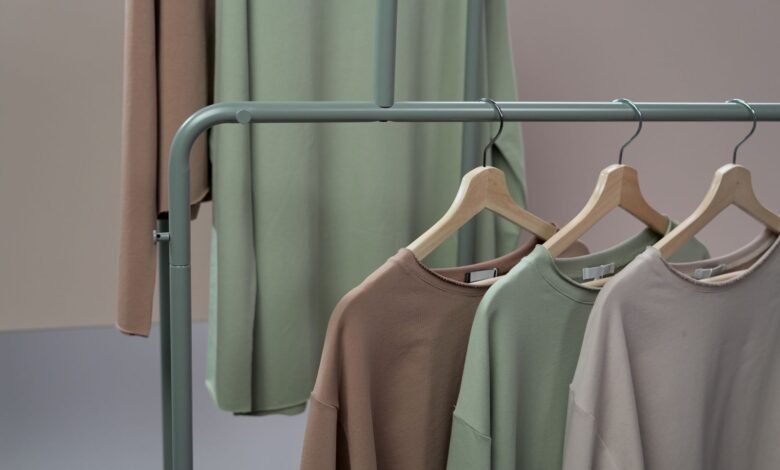
How to Rebuild a Capsule Color Palette That Functions Across Multiple Contexts Instead of One
A capsule color palette that only works for the office isn’t missing colors. It was assembled to pass one dress code and collapses elsewhere because every piece shares the same formality or mixes conflicting undertones. Rebuilding means mapping each pairing across five real contexts and calculating which items drive the failures before you buy anything new. Undertone clash creates failures…
Read More » -

How to Use Cost-per-Wear Calculations Across Seasonal Transitions to Decide Which Capsule Pieces Justify Continued Investment
A capsule piece stops justifying continued investment when its actual cost-per-wear climbs consistently above what you projected and fails to recover at the next seasonal transition. If the number keeps rising even after a full wearing window, the garment is delivering fewer outfits than you paid for. That drift happens because seasonal storage locks in missed wears instead of letting…
Read More » -

Why Capsule Wardrobes Expand Without Gaining Function When Fabric Versatility Is Not Evaluated Before Purchase
Your capsule expands without adding outfits because most new pieces can only survive in one or two dress codes. When the fabric’s weave, density, and fiber texture signal casual, it cannot credibly pair with anchors built for business casual or smart casual, so your combination math stays flat. Color matching does not override that physical ceiling. There is a tradeoff…
Read More »