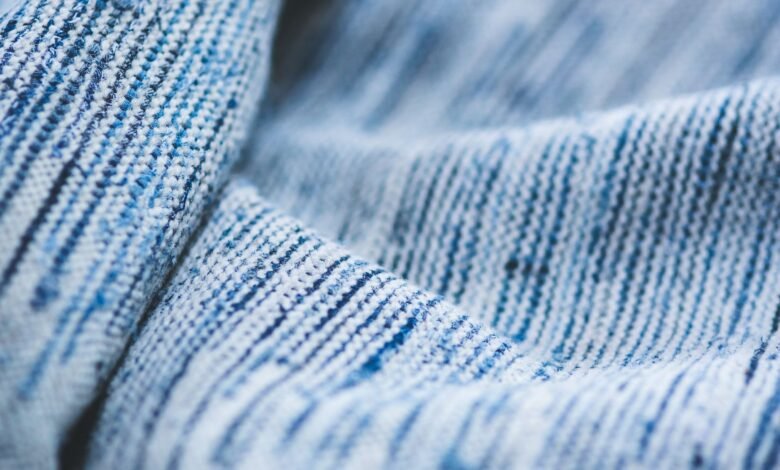
An expensive work blouse can still pill quickly, and stronger fibers often make pills look worse, not better. The better check is fiber form, yarn twist, hairiness and fabric tightness, not price or soft hand feel.
Peer-reviewed textile research and standards-body tests explain the anchor-fiber mechanism, not brand anti-pill claims. Soft drape and wrinkle resistance often need low-twist staple yarns that pill more, while filament yarns pill less but feel slicker.
Labs measure it with random tumble and Martindale testers, grading 5 no pilling to 1 very severe. Learning the 5 to 1 grade and two quick checks for twist and density helps you pick a blouse that stays smooth after 20 wears.
Why do polyester work blouses pill so quickly even when the price is high?
Your work blouse may look smooth on day one and show tiny balls under the arms by day five. Polyester does not prevent this, because its high strength can hold pills in place instead of letting them shed.
When fabric rubs, fiber ends break and lift to the surface. This first fuzz tangles into small balls. Cotton fibers are weaker, so the balls often break off and fall away. Polyester fibers are strong, so the same balls stay anchored.
Strong fibers hold onto pills longer instead of shedding them, which makes pilling more visible over time. Research notes that anchors that hold onto them keep pills attached. That mechanism explains why a high-tenacity yarn can look worse than a weaker one.
Many expensive work blouses use spun staple polyester for a soft matte hand and fluid drape. Staple means short lengths spun together, which leaves more short ends near the surface. Those ends become fuzz quickly under arm friction, even when price is high.
Interactive calculator: adjust settings to estimate outcome
The four stages of pilling and where work blouses fail first
Textile testing describes four stages of pilling: fuzz formation, entanglement, growth, and wear-off. This sequence helps you spot early damage before it spreads.
Stage one is broken fiber ends lifting. Stage two is those ends tangling.
Stage three is the tangle rolling into a firm ball. Stage four is the ball breaking off. In polyester, stage four is slow because anchor fibers are strong.
Work blouses fail first where friction is constant. Under arm, along side seam, at cuff edge where a bag strap rubs, and across front where a seatbelt crosses. Those zones can show fuzz at 5 wears, visible pills at 10 wears, and clusters at 20 wears if yarn is low-twist staple.
Lab reporting uses scale ranging from 5 to 1, where 5 is no pilling and 1 is very severe pilling. Try this before you buy: turn the blouse inside out and look at under-arm seams for short stray hairs already lifting.
Stage boxes showing process in 4 stages from start to finish
Staple versus filament and why yarn twist matters more than price
This same friction that creates pills at 5 wears points to yarn construction. Fiber form and twist decide how many ends can lift in the first place.
Polyester staple fiber is made as staple fibers short lengths of approximately 25–76 mm spun together like cotton. Filament is a continuous unbroken strand with no short ends. A fabric made from filament less likely to pilling because there are fewer ends to migrate.
Low twist and hairy yarns leave more fiber tips exposed. Research notes that low twist and high hairiness prone to pilling because the yarn structure is open. High twist binds fibers tightly, so fewer tips escape. Examining the yarn under bright light reveals hairy flyaways on low-twist staple.
Short staple length favor pilling because fewer binding points hold each fiber. Loose weaves with low picks per inch also pill more, as yarns move and abrade each other. Many mid to high price work blouses choose low-twist staple for soft matte drape, which explains why price alone does not prevent pilling.
For related guidance on how abrasion concentrates at knees and seat in work pants and why GSM alone does not predict it, see our guide on why black work pants fade at the knees and seat first.
Stage boxes showing process in 2 stages from start to finish
Does polyester pill more than cotton or just hold pills longer?
Both cotton and polyester can form fuzz, but what happens next differs. That difference answers the common question does polyester pill more than cotton.
Cotton fibers have lower tenacity. Pills form, then anchor fibers break and pills shed.
The blouse may look fuzzy briefly, then clear again. Polyester fibers have high strength, so pills form and stay. One material shows the same process, the other keeps the evidence.
Strong fibers hold pills once formed, while cotton with longer staple can resist initial fuzz. Research notes that high strength makes balls less likely to fall off, which explains why polyester pills look persistent.
Blends can look worse than 100% cotton for this reason. In a polyester-cotton blend, cotton provides soft fuzz, polyester provides strong anchors. The result is visible pills that neither fiber would hold alone for long.
How to check fabric pilling resistance before you buy
You cannot run a lab test in store, but you can screen the same factors labs test. This is how to check fabric pilling resistance using four quick checks.
Lab methods define what grade means. Random tumble pilling tester simulates wear by tumbling fabric with cork, and Martindale tester rubs fabric against a standard abradant. Both use the 5 to 1 scale. You can borrow the logic without the machine.
Start with fiber form. Check the care label and online product detail. If it says filament, 100% polyester filament, or continuous filament, it typically pills less than spun or staple. If it says spun, soft matte, or peach finish, assume staple.
Next, look at twist and hairiness. Hold the blouse to bright overhead light and look for hairy yarn ends sticking out from weave and open spaces between yarns. Smooth yarns with tight twist show little halo. Hairy yarns with loose twist show fuzz even before wear.
Then check weave density and seam finishing. Hold fabric to light.
Very open, see-through construction allows yarns to move and abrade more. Under-arm seams with narrow stitching and no binding abrade faster than reinforced seams. Work blouse fabric quality inspection means checking those high-friction zones first, because that is where polyester blouse pilling causes show earliest.
Treat pilling resistance as a core spec when you buy. As one trade guide advises, treat pilling resistance as core spec and ask about yarn path and finishing, not just hand feel.
Why anti-pill label does not guarantee no pilling
An anti-pill label often means the fabric was singed to burn off surface fuzz or given a chemical finish that reduces initial friction. That can lift initial grade to 4, but it does not change short staple length or low twist underneath.
Finishes can diminish with washing. After 10 to 20 wears, especially under arm where sweat and deodorant soften finish, fuzz returns if base construction is prone. High-friction zones still pill because root cause remains.
How to grade pilling at 5, 10 and 20 wears with a simple at-home method
You can track pilling the same way labs grade it, using photos and the same 5 to 1 scale, without a machine. This adapts ASTM grading to real wear.
Choose two zones: under arm and side seam. Take phone photos at 5, 10, and 20 wears, same distance, same bright daylight, same white background. Compare to the five-grade rating scale where grade 5 is pilling-resistant and grade 1 is very severe pilling. Labs also note specimens are graded from 5 to 1 using visual charts.
Grade 5 means no pills. Grade 4 means slight fuzz or isolated pills. Grade 3 means moderate pilling visible at arm length.
Grade 2 means severe coverage. Grade 1 means very severe, surface matted. If you drop from 5 at purchase to 4 at 5 wears and 3 at 10 wears, construction is low-twist staple in a loose weave.
At the side seam, look for small fuzz balls anchored by one or two fibers versus loose lint that brushes off. Anchored balls that stay after gentle brushing count toward grade. Loose lint does not. Documenting intervals shows progression, not a single snapshot, so you see whether pills shed or stay.
Garment quality scoring rubric for pilling risk
This rubric is a practical evaluation tool created for this guide based on twist, density, and abrasion mechanisms described above, not a published industry standard. Use it as an in-store quick-check.
Step 1: score fiber form
Give 5 points for filament, 3 points for high-twist staple, 1 point for low-twist staple. Check label for filament or spun, and look for smooth versus matte hand.
Step 2: score yarn hairiness
Give 5 points for smooth yarn with almost no halo, 3 for slight halo, 1 for hairy yarn with many flyaways under light. Hairiness signals short ends ready to pill.
Step 3: score fabric construction
Give 5 points for tight plain weave with high picks per inch, 3 for medium tight, 1 for loose open weave that shows light through. Tight construction reduces yarn movement and abrasion.
Step 4: score abrasion zone finishing
Give 5 points for reinforced under-arm seams with binding or flat-felled finish, 3 for standard overlocked seam, 1 for raw or narrow single stitch in high-friction zone.
Step 5: score prior history or sample grade
Give 5 points if sample or previous same model shows grade 5 after 10 wears, 3 for grade 4, 1 for grade 3 or below. If no history, leave blank and score out of 20.
Add points. Approximately 20 to 25 total suggests low risk.
Approximately 12 to 19 suggests moderate risk, buy with a care plan. Below 12 suggests high risk, skip if you need a blouse that stays smooth for office wear. This covers polyester blouse pilling causes and helps with work blouse fabric quality inspection before you pay.
| Criteria | 5 points | 1 point |
|---|---|---|
| Fiber form | Filament, continuous strand | Low-twist staple, soft matte |
| Yarn hairiness | Smooth, no halo | Hairy, many flyaways |
| Construction density | Tight weave, high picks | Loose open weave |
| Abrasion finishing | Reinforced, bound seams | Raw narrow seam |
Where most buyers go wrong
Check fiber form and yarn twist before price, because polyester pills stay visible since strong anchor fibers do not shed, so low-twist staple in tight friction zones can show grade 3 by 10 wears. Using the rubric in store helps you skip a blouse that looks worn after a month. Choosing filament or high-twist staple keeps the surface smooth longer.
Frequently Asked Questions
Does polyester pill more than cotton, or does it just look like it does?
Both can form fuzz, but polyester staple anchors keep pills, while cotton pills often break and shed. That is why polyester shows hold onto pills longer and is less likely to fall off after forming. Filament polyester typically pills less than staple.
How can I tell if a polyester work blouse is filament or staple before buying?
Look for label wording filament, continuous filament, or 100% polyester filament versus spun. Filament feels smooth with slight luster, staple feels soft matte with faint halo. Under light, staple shows short ends sticking out, which signals more pilling risk.
Is an anti-pill finish worth paying more for a work blouse?
Anti-pill singeing can lift initial grade to around 4 by removing surface fuzz. The finish can fade with washing and does not change low twist or short staple length underneath. It is worth it only if base yarn is high-twist or filament, otherwise moderate risk typically returns after 10 to 20 wears.
What should I do if my expensive work blouse already pilled under the arms?
Use a fabric shaver gently, wash inside out cold, and reduce friction from bag straps. De-pill early before pills grow and tangle further. If yarn is low-twist staple, pills may return because root cause remains, so use the rubric for next purchase.