In law, the documented standard for women remains a matched navy or charcoal wool suit with a high-coverage blouse and closed-toe pumps because juries read conformity as credibility. Finance keeps that suit but rewards seasonless wool and flawless grooming for client trust, while tech treats the suit as optional and prefers dark tailored separates with a knit blazer that signals authority without rigidity. Each measures a different risk – liability, capital, and product velocity.
The tradeoff is fit: the heavy canvassed wool that wins in court feels overdressed in a tech stand-up, while low GSM knits that work in tech fail in law. Weight and canvas predict compliance more reliably than price does, and both show up in how a lapel rolls and how the fabric responds to steam. Use the benchmark below to audit your wardrobe by industry.
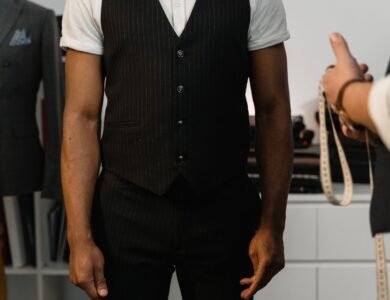
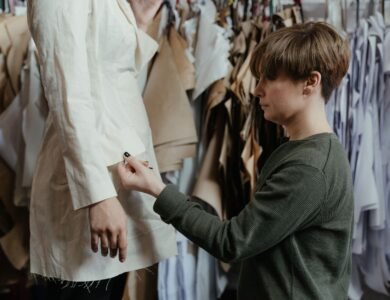
Visual benchmark of formality expectations by industry; law requires matched suiting, finance rewards textile polish, tech rewards structured separates.
The Formality Spectrum, Documented: What Each Industry Actually Measures
Law, finance, and technology do not share a single professional standard. Each runs on its own rubric:
- Law: Measures conformity and court-readiness. Matched dye lot, skirt at knee, opaque blouse, closed pumps. No novelty hardware.
- Financial Services: Measures consistency under client scrutiny. Tonal suits allowed, but fabric must resist pilling and shine through 10-hour days.
- Technology: Measures executive presence without hierarchy. Can you go from stand-up to exec review without looking off in either?
This is why the same navy blazer passes three ways for different reasons. For law it passes because it is part of a full suit; for finance because it is worsted wool with a clean roll; for tech because it is paired with tailored trousers.
If you are building a cross-industry wardrobe, start with the overview in our workwear capsule framework and then filter by the specs below.
Textile Science: The Fabrics That Pass the Room Test
Industry dress codes are really fabric filters in disguise. What looks professional is a function of weight, coverage, and recovery.
Wool, Tropical Wool, and Twill: GSM and Weave
Suiting wool is measured in GSM and Super numbers. For women:
- Law: 230-310 GSM, Super 110s-130s, 2/2 twill or hopsack. High-twist yarns like Fresco resist trial-day wrinkling.
- Finance: 200-280 GSM, Super 120s-150s plain or fine twill for year-round opacity under fluorescents.
- Tech: 180-260 GSM wool blend with 2-4% elastane for commute stretch and soft hand.
Weave affects wear: twill hides abrasion, hopsack adds texture without pattern, plain weave wrinkles fastest. SPI is your quality proxy: 10-12 SPI on blazer seams is standard, 18-22 SPI on blouses signals tighter control.
Ponte di Roma and Crepe: Why Knits Behave Differently
Ponte is not jersey. Its double-knit structure is documented in the Wikipedia entry for Ponte fabric as an interlock produced on rib machines, where two fabrics are knitted together for stability. That construction gives it a GSM over 300, moderate 20-30% stretch, no edge curl, and a slight sheen that reads more polished than ponte-leggings suggest.
Use case by industry:
- Law: Avoid ponte for court or interviews; allowed as a secondary blazer only if paired with structured suiting trousers and no exposed logo.
- Finance: High-quality ponte at 320-360 GSM is acceptable for internal days, but not for client pitches if your team still wears full suits.
- Tech: Ponte blazers (270-330 GSM with 66% viscose / 30% nylon / 4% spandex blends) are a workhorse because they pack without wrinkling and recover after sitting.
Crepe de Chine (lightweight, 60-100 GSM) and triple crepe (200-250 GSM) work as blouses because the twisted yarns create a matte, opaque surface that hides undergarment lines, unlike silk charmeuse.
Fiber Properties Decoded
Durability and comfort follow fiber physics:
- Wool: Natural crimp = recovery, odor resistance; weak when wet; felts if agitated. Best for suits that must hold shape.
- Viscose / Rayon: Excellent drape, breathable, but low elastic recovery – needs nylon or elastane support to avoid bagging at knees.
- Nylon: Adds abrasion resistance (important for trouser inner thighs).
- Elastane (Spandex): 2-4% improves mobility; over 5% causes shine and seam fatigue in tailored jackets.
For blouses that survive under blazers, see our blouse pairing guide covering opacity and pill resistance.
Diagram shows which fabric weights cluster as compliant by industry when judged on structure and stretch recovery.
Construction Is the Compliance Layer: Fused vs Half Canvas vs Full Canvas
A blazer’s interior dictates whether it keeps its line after 20 wears. The distinction is canvas:
- Fully Fused: Outer fabric glued to interlining with heat-activated adhesive. Cheapest to produce, clean when new, but prone to bubbling and delamination after dry cleaning. Fused panels, as detailed in De Oost’s tailoring guide to construction methods, lack breathability and natural lapel roll.
- Half Canvas: Horsehair/cotton canvas extends from shoulder through chest and lapels, lower front is fused. A balance of shape and cost. Their house standard is half canvas with horsehair padding, as explained in Sartoro’s breakdown of suit construction, to hold shape without excess weight.
- Full Canvas: Canvas runs the full front, hand pad-stitched to the shell so the jacket molds to the body. The comparison in Oliver Wicks’ full canvas vs half canvas guide shows superior drape, lapel roll, and decades-long durability versus stiffness and lifelessness in fused.
For women, the practical check is the pinch test below the button and the lapel roll test. If you can feel a floating third layer between shell and lining, and the lapel forms a soft curve rather than a flat pressed crease, it is canvassed. Law favors half-canvas minimum; finance rewards full canvas for suits worn weekly; tech can use unlined half-canvas for breathability in un-air-conditioned offices.
The Industry-by-Industry Benchmark
Use this as the audit rubric. Acceptable / Borderline / Non-compliant reflects U.S. practice in large law firms, bulge-bracket and regional banks, and mid-to-large tech companies.
| Category | Law | Financial Services | Technology |
|---|---|---|---|
| Suit | Matching wool 230-310 GSM, half-canvas min., 2-button or 1-button. Skirt or pant. | Matching or tonal wool 200-280 GSM, half to full canvas. Tonal allowed. | Separates. Suit optional for board/exec reviews only. |
| Blazer Fabric | Worsted twill/hopsack, no elastane shine, lining fully intact. | Worsted + 2% elastane max, crepe, fine twill. Dark neutral. | Ponte 270-360 GSM, knit blazer, scuba-crepe if structured. |
| Blouse / Shell | Opaque, high neckline, 18+ SPI, no sheer. White/blue/pale pink. | Silk crepe, cotton pop-over, matte jersey. Minimal ruffle. | Matte jersey, fine-gauge knit, merino tee + blazer. |
| Bottoms | Wool trousers or pencil skirt, lined, hem at knee. | Tailored trousers, 5-pocket black trouser denim only on casual days if permitted. | Tailored trousers, dark non-distressed denim if paired with structured blazer. |
| Shoes | Closed-toe pumps 1.5-3" or oxfords. No ankle strap court distraction. | Pumps, loafers, pointed flats. Heel 0.5-3.5". Polished leather. | Loafers, minimalist sneakers, boots. Clean, non-athletic. |
| Fail Conditions | Fused shine, under 200 GSM shell, leggings as pants, logo hardware. | Pilling merino, wrinkled linen suit, athleisure. | Stiff full suit daily, excessive logos, sheer + lace visible bra. |
For more visual examples of blazer silhouettes that cross industries, compare our blazer edit for structure and length.
Cost-Per-Wear and Durability Math: Where to Invest
Formality correlates with cost-per-wear because construction outlasts fabric.
Formula: CPW = Purchase Price / Estimated Wears before retirement (not washes). Estimate wears by construction: fused 50-100, half canvas 150-250, full canvas 300-600 if cared for and rotated.
- Law suit example: $550 half-canvas wool suit at 180 wears = $3.05/wear. A $180 fused suit at 55 wears = $3.27/wear with higher dry-cleaning failure rate. Full canvas at $850 for 350 wears = $2.42/wear.
- Tech ponte blazer: $128 ponte at 120 wears = $1.07/wear; outperforms a $300 wool blazer worn only 40 times in tech because overdressing reduces wear frequency.
- Finance blouse: $95 triple-crease blouse with 18-22 SPI at 90 wears = $1.06/wear vs silk charmeuse that snags at 25 wears.
Investment priority by industry: law = suit > shoes > blouses; finance = suit = grooming > bag; tech = blazer + trousers > outerwear > shoes. Rotate at least two suits if you appear in court or client meetings more than three days per week to allow 24h fiber recovery.
Audit Your Wardrobe: Checklist and Decision Tree
The 90-Second Compliance Checklist
- GSM check: Can you see undergarment outline under office LEDs? If yes, fails opacity.
- Canvas check: Pinch below button – floating layer? Lapel roll curved not creased?
- Weave check: Hopsack/twill hides wear better than plain weave under bags.
- SPI check: Flip blouse inside out – 8-10 SPI is mass market; 18+ is audit-ready.
- Recovery check: Pinch knee of trousers for 5 sec – if fabric holds peak, fiber lacks recovery for finance length days.
- Hem check: Skirt knee-length when seated? Trouser break covering tongue of shoe?
- Hardware check: No gold oversized buttons in law interview; minimal in finance; acceptable in tech.
Decision Tree: Should You Wear It?
If you work hybrid, build your base from finance specs and layer tech knits over it; that combination converts fastest without needing three separate wardrobes.
Professional standards are not static, but fabrics and construction are measurable. Choose a half-canvas or full-canvas shell in the right GSM, verify opacity and SPI, then map it to your industry rubric. Audit what you own, invest where cost-per-wear drops, and wear the version that removes doubt before you speak.
FAQ
Can I wear a ponte blazer to a law interview?
No. Even a high-quality 320+ GSM ponte reads as knitwear under litigation scrutiny. For interviews, wear a half-canvas wool suit in 230-310 GSM hopsack or twill with closed-toe pumps; save ponte for internal workdays after you are hired.
What is the best cost-per-wear investment for finance women?
A full-canvas or high-quality half-canvas suit in 220-280 GSM Super 120s-130s tropical wool. It resists pilling, recovers after commuting, and drops below $3 per wear after 150 wears versus fused suits that bubble and retire early.
How is full canvas different from fused in real life?
Full canvas uses hand pad-stitched horsehair that floats between shell and lining, so the lapel rolls and the jacket molds to your shape. Fused glues fabric to interlining; it looks stiff at first and can bubble after dry cleaning, reducing drape and life.
I split time between tech and client finance – what should I pack?
Pack the finance base: dark wool trousers, tonal half-canvas blazer, and opaque crepe blouse. Add a ponte blazer for tech days. This capsule passes both rooms and avoids buying two full wardrobes while keeping construction compliant.