
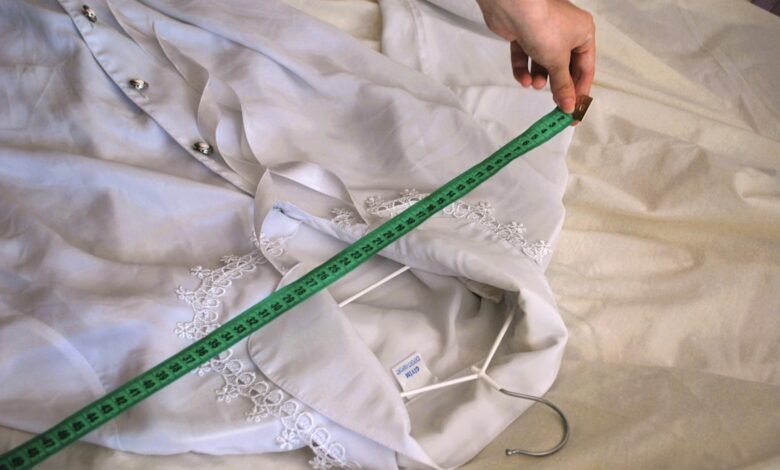
Fabric weight is printed nowhere on most garment tags. You’re left squinting at product photos, guessing whether that blazer will drape or stiffen, whether the trousers will bag at the knee after two wears. GSM — grams per square metre — is the number that answers those questions, if you know how to read it.
This guide uses standards for fabric weights (mass per unit area) from various manufacturers and compares it with data provided by garment manufacturers to provide a basis for consumers to assess fabric weight from lightweight knit garments to structured wool blazers, without using exaggerated marketing claims.
Quick Summary
- Understand what GSM really measures and why it matters for durability, opacity, and drape.
- Identify the appropriate GSM range for t-shirts, blouses, trousers, blazers, and dresses.
- Spot common GSM misconceptions that lead to overpaying for flimsy fabric.
- Use a printable reference chart and tactile checks to evaluate garments before buying.
- Learn how care and fiber type affect fabric weight behavior over time.
This article covers capsule wardrobe options in cotton and linen, wool, and blended fabrics, across different price points to accommodate yearly professional travel.
The Truth About GSM Range: What “Best” Actually Means for Capsule Wardrobe Staples
Before you buy, check the brand’s product page for a fabric weight declaration — it’s often hidden in the “Details” tab, if it appears at all. Cotton Incorporated’s technical resources classify knit and woven fabrics as lightweight below 150 GSM, midweight between 150 and 250 GSM, and heavyweight above 250 GSM. Those boundaries are your first filter.
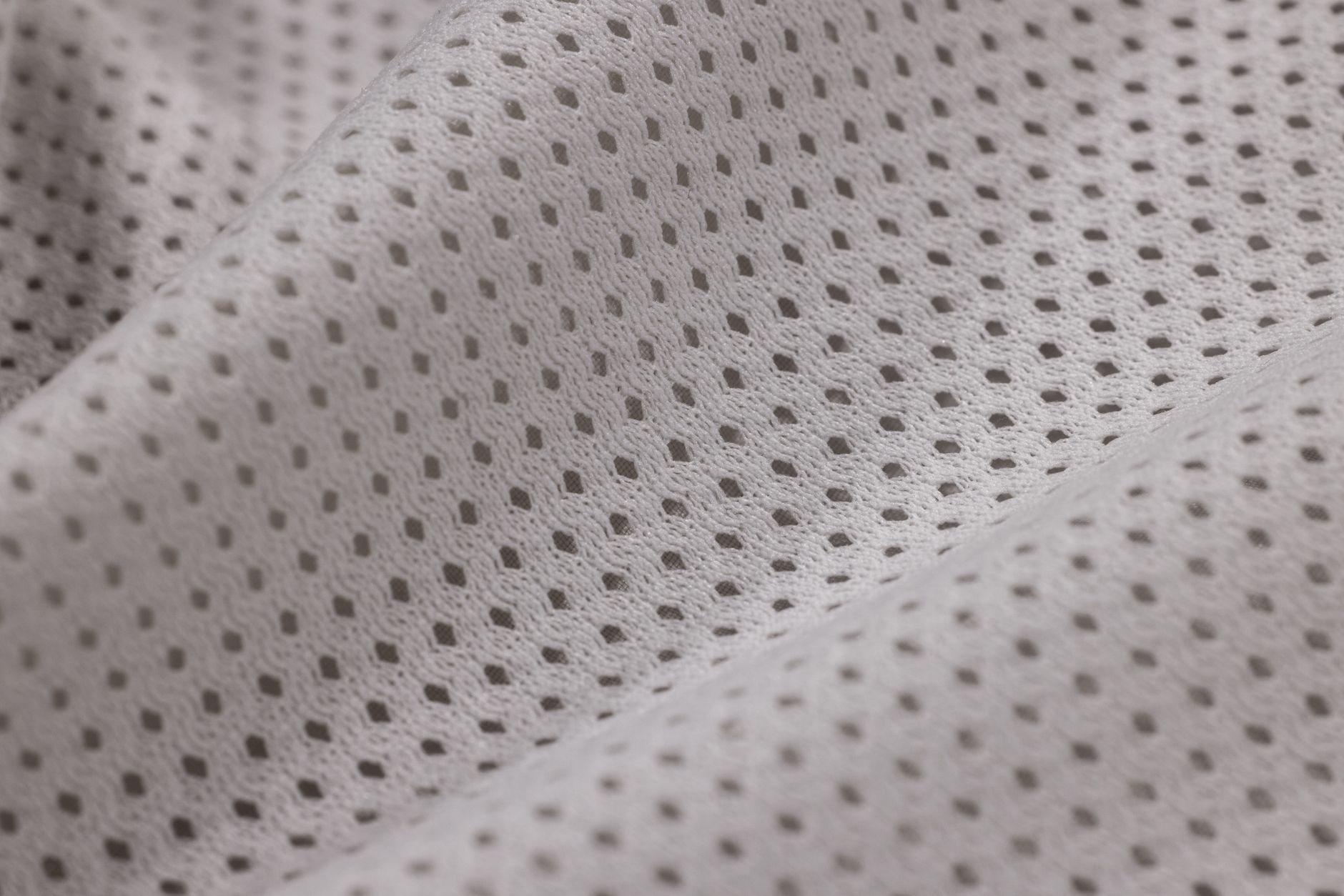
The Minimum Viable GSM for Key Garment Types
- 120–150 GSM: lightweight summer tops, base layers, sheer blouses
- 150–180 GSM: dress-weight shirts, fine-knit sweaters
- 180–220 GSM: substantial t-shirts, lightweight trousers
- 220–280 GSM: midweight trousers, blazers, light jackets
- 280–350 GSM: heavy blazers, suiting, winter trousers
- 350+ GSM: outerwear, heavy knits, structured jackets
Why GSM Alone Can’t Tell the Full Story
A 200 GSM linen shirt and a 200 GSM compact wool blazer each will react differently. The linen will be a cooler and less structured fabric because it has an open weave and is stiff, whereas the wool crimp and resilience will give that 200 GSM of weight a warmer and crisper sensation. You can open up the fiber composition tab on each product page to find out what that GSM number means in practice.
GSM by Garment Purpose: Matching Fabric Weight to Real-World Use
For a year-round capsule, 180–250 GSM covers most staples, while 120–150 GSM suits lightweight layering pieces and 250–350 GSM handles outerwear and structured suiting. There is no single best thickness of garment; the number of thicknesses you purchase should vary depending on what type of climate will be experienced during the planned season and how the garment will be worn.

Travel Clothing: The GSM Trade-Off
Packable travel clothing tends to be 130–160 GSM. These garments are designed to dry quickly and fold flat, however they do not provide the same level of durability when it comes to wear. For example, a 140 GSM merino t-shirt is lightweight, but will not hold up to the same level of repeated use as a 190 GSM cotton t-shirt.
You may wish to test the durability of a travel-weight garment by holding it in front of a bright light source. If you see through the weave, or if the fabric feels thin when holding it in your hand, the product is unlikely to last through several washing and wearing cycles.
Professional Staples: Blazers, Trousers, and Blouses
A typical blazer will not provide the same level of support and will sag at the shoulder and lapel area. If you’re looking for a pair of trousers you’ll want them to be around 200–240 GSM. The ideal fabric for these trousers is made from a compact weave.
A compact weave fabric is less likely to “bag” out at the knee and helps the trousers to fall in a clean drape from the waist and not add additional bulk to your look. A standard woven blouse will fall between the 130-170 GSM range. A woven blouse weighing below 130 GSM will require a camisole underneath for added support.
Year-Round Versatility: The 200–220 GSM Sweet Spot
Garments in the 200–220 GSM range — think ponte knit trousers, mid-weight cotton tees, light wool sweaters — help maintain their shape through multiple seasons without being excessively heavy. These garments also layer comfortably under jackets, providing good flexibility in both office and casual environments. If you’re building your capsule from scratch, begin with garments in this weight range.
Price-Tier Comparison: Measuring GSM Across Budget, Mid-Range, and Investment Garments
It may help to see how different garments compare in GSM measurement across three segments—budget, mid-range, and investment. For example, while there may be two different t-shirts that have the same GSM, the two garments could be made using completely different materials with completely different prices associated with them. The inexpensive version is made with yarn that has been opened up by carding; therefore, it will pill within 15 washes. The more expensive garment, on the other hand, will use long-staple combed cotton, and this type of cotton will continue to feel smooth and soft for an extended period.

Side-by-Side Comparison Table: GSM Measurements Across 8–10 Garments
The table below reflects typical GSM ranges and fiber specifications cross-checked against publicly available brand documentation and textile industry benchmarks. Use it as a reference, not a replacement for in-hand examination.
| Garment Type | Price Tier | GSM Range | Fiber Composition | Weave/Knit | Notes |
|---|---|---|---|---|---|
| T-shirt | Budget | 120–150 | Carded cotton, cotton-poly blend | Single jersey | Sheer, prone to neckline stretching |
| T-shirt | Mid-range | 170–200 | Combed cotton | Single jersey | Opaque, holds shape after washing |
| T-shirt | Investment | 200–220 | Long-staple cotton (Supima®) | Compact single jersey | Smooth hand, resists pilling |
| Woven blouse | Budget | 90–120 | Polyester, poly-cotton | Plain weave | Static-prone, limited breathability |
| Woven blouse | Mid-range | 120–150 | Cotton, cotton-modal | Poplin | Crisp but requires ironing |
| Woven blouse | Investment | 140–180 | Silk, fine cotton lawn | Twill or plain | Drapes well, needs gentle care |
| Trousers | Budget | 150–180 | Poly-viscose blend | Twill weave | Knots and pills at inner thigh |
| Trousers | Mid-range | 190–230 | Cotton-elastane, wool-polyester | Twill, ponte knit | Good recovery, reasonable shape retention |
| Trousers | Investment | 220–280 | Wool gabardine, linen-cotton | Worsted twill | Holds crease, breathes, decades of wear |
| Blazer | Budget | 180–220 | Polyester, polyester-rayon | Plain or basket weave | Collar and lapel won’t hold crisp edge |
| Blazer | Mid-range | 250–280 | Wool-polyester, cotton blends | Twill, hopsack | Acceptable structure, moderately breathable |
| Blazer | Investment | 280–350 | Wool, wool-mohair | Worsted, flannel | Maintains shoulder line, multi-season use |
When you look at the t-shirt rows, they are all within a GSM range of 120-220. However, the way the fibers are prepared (e.g., longer fibres create less opportunity for pilling) as well as the way in which yarn has been twisted affect the garment’s ability to stand up to aging. Similarly, when looking at the investment grade long-staple or Supima® cotton used on the t-shirts, this is why you will always see that t-shirts that are very similar in weight, but the long-staple cotton or Supima® cotton will always be smoother in the surface. The data from the blazers supports a minimum of 250 GSM — 180 GSM on a budget blazer would essentially classify as a cardigan with long sleeves.
What You Actually Pay For Beyond the GSM Number
Manufacturers calculate GSM according to the ASTM D3776 standard test method, which includes taking a cut of a specific amount of fabric accurately and weighing it under controlled conditions. This number alone does not indicate fibre length, ply of yarn, or finishing methods, therefore, as a rule of thumb, the higher price garments, which share the same GSM, will more likely utilise ring-spun yarn against open-end yarn thus creating much less surface fibres that pill. Fabric finishing processes — mercerization, sanforization, compacting, etc. — stabilizes fabric so that the GSM measurement remains constant when washed (i.e., no more than 4–7% shrinking).
Where Most Guides Get This Wrong
The vast majority of advice on GSM treats GSM as the equivalent of a ‘thread count’, suggesting that a higher GSM is always better; that thought process completely ignores what we consistently learn through fibre science: A 200 GSM open-weave linen fibre has ZERO relation or comparison to the same fibre (200 GSM) that is made into a compact wool worsted. (In fact, the linen version could work well for a sporty summer jacket where you expect creasing, while the wool version will insulate your body and spring back to its original shape). Similarly, a 300 GSM cotton sweatshirt is dense but significantly breathes compared to a 300 GSM polyester fleece. Always consider GSM in relation to the type of fibre and the type of construction, NEVER view GSM as a standalone badge of quality.
Practical GSM Reference Chart: What to Look For By Garment Type
Use this chart as a shopping companion. The ranges aren’t gospel — they’re where you’ll most consistently find garments that last.
| Garment Type | Recommended GSM | Visual Cue | Tactile Test |
|---|---|---|---|
| T-shirts & knit tops | 180–220 | Holds shape when draped over your hand; no transparency | Pinch fabric at the side seam — it should spring back, not leave a dent |
| Blouses & woven tops | 130–180 (for drape), 100–130 (sheer layers) | Even weave, no visible gaps | Gather a handful and release; quality cotton lawn recovers without deep creases |
| Trousers & skirts | 200–280 | Weighty enough to fall straight; no underwear outline | Rub inner seam between fingers — fabric shouldn’t feel gritty or thin |
| Blazers & jackets | 250–350 | Lapel stands away from chest; shoulder maintains curve | Squeeze the fabric over a flat surface; it should resist compression rather than crush |
| Dresses | 160–250 (depending on style) | No clinging at hips; skirt hangs without ballooning | Hold up to light — opaque enough that you can’t count fingers, but breathable |
T-Shirts and Knit Tops
Quality cotton T-shirts below 160 GSM can easily twist on the side seams and lose shape around the neckline. The ideal cotton t-shirt weight at 180 to 200 GSM is ideal for proper drape without being stiff. One way to tell if a cotton t-shirt below 200 gsm will lose opacity with wear is to stretch the fabric slightly along the crosswise grain (this will help you identify this).
Blouses and Woven Tops
For summer offices, a clean cotton poplin blouse at 130 GSM is ideal, while a poplin blouse below 100 GSM requires a camisole for proper coverage. Silk crepe de chine typically has GSM values around 160, which provides enough weight for the drape/hang of the fabric while providing enough breathability. If the crinkled fabric in its crease is retained while held in the palm of your hand, this indicates that the fabric has poor recovery and will continue to have poor recovery regardless of the indicated GSM value.
Trousers and Skirts
In general, non-stretch woven trousers have a tight twill weave with a GSM value of 200 – 240. This helps to prevent “seat shine” and knee bagging. Ponte knit trousers (250 GSM) offer a combination of structured fabric while offering maximum comfort. The hem finishing of the inner seams should also be considered; a flat-felled or bound seam will distribute the tension created by stress on the trouser better and allow for the fabric to hold the shape longer.
Blazers and Jackets
A well-tailored blazer has to have at least 250 GSM. A blazer made of 300 GSM wool hopsack will provide a comfortable fit during three different seasons, while a linen blazer is typically at least 280 – 310 GSM to create enough mass to maintain its shape. Feel the inside of the blazer at the chest canvas; if you can feel that there is only one layer of a thin, flimsy fabric, then the GSM value will not help maintain the silhouette.
Dresses
Cotton or linen shirt dresses of 150 – 200 GSM are a good weight to avoid wind pushing the fabric against the body. Jersey dresses should be made of a minimum of 200 GSM to avoid sticking to the body, while a 250 GSM ponte dress may skim the body and hide a missed ironing day.
Cost-Per-Wear Implications of GSM Selection
If a t-shirt priced at $60 for a weight of 160 GSM pills/twists after 15 washes, it has a cost-per-wear of $4. However, if you buy a t-shirt priced at $90 for a weight of 200 GSM made of high-twist yarn and is capable of lasting for 100 wears, then it has a cost-per-wear of $0.90. Suit jackets and pants have the highest variance in overall fabric thickness when compared to other types of clothing.
The GSM value when combined with good quality materials and construction will give you a rough idea of how long you can expect the garment to last. While not a guarantee, it certainly will give you an idea of the likelihood of longevity.
Care, Maintenance, and Longevity: Protecting Your Fabric Weight Investment
Your washing machine and dryer have a lasting effect on your GSM. A 220 GSM piece can lose its structure and feel like a thinner, limp blank in six months due to excessive washing.
How Washing Changes Fabric Weight Behavior
Cotton knits that are not pre-shrunk can shrink up to 5-8% after the initial hot wash, causing a decrease in GSM while distorting fit. Wool, through heat and agitation, can felt to become denser and thicker while losing some of its size. The FTC Care Labeling Rule requires fabric manufacturers to recommend one safe care method, however, it does not require manufacturers to pre-shrink their fabrics.
Look for the “preshrunk” label, or sanforized on woven cottons. Always use cold water and hang to dry; too much heat will cause the fibres to degenerate and finishes to break down. The GINETEX care symbols will show you the exact temperature and type of mechanical action permitted on any fabric. If you ignore the symbol for “hand wash only” on a 180 GSM merino wool sweater, you can almost guarantee it will felt.
When GSM Doesn’t Matter: Recognizing Your Climate and Lifestyle Limits
If you live in a humid, 35°C climate, then most likely your 280 GSM blazer will hang in your closet for eight months of the year regardless of how beautifully it is constructed. An honest self-assessment is imperative: Do you run warm, do you wash your clothes after every wear, or do you tend to reach for the lightest pieces in your wardrobe? A 150 GSM linen button-up that you wear 60 times a year will serve you far better than a 250 GSM wool option that you wear two times. The number that appears on a spec sheet cannot take the place of your individual wearing habits.
Frequently Asked Questions
What GSM is best for capsule wardrobe clothing? A range of 180–250 GSM suits most year-round staples, providing enough density for opacity and structure without excessive heat. Cotton, linen, and wool pieces at the same weight will behave differently, so adjust for fiber type and climate.
Does higher GSM always mean better quality? No, GSM measures density, not fiber grade or weave quality. A 200 GSM garment from long-staple cotton will outlast a 300 GSM piece made with short, weak fibers.
How can I check fabric GSM before buying online? Look for a fabric weight specification on the brand’s product page, often under “Details.” When it’s absent, rely on fiber content, weave description, and customer photos showing the fabric’s opacity and drape.
What’s the minimum GSM for a blazer that won’t look cheap? Aim for at least 250 GSM; below that the fabric lacks the body to hold a sharp lapel and shoulder line. Above 320 GSM can feel overly heavy for multi-season wear.
Written By: Armughan Akbar | Fashion & Wardrobe Content Writer, shetrended.com
Reviewed and fact-checked by Shetrended Editorial Team against established textile and garment certification standards, including OEKO-TEX®, GOTS, and Woolmark®.
