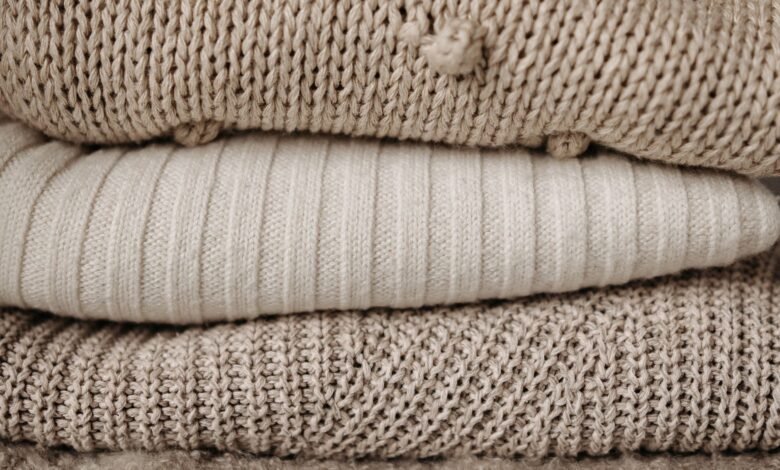
Knitwear pills early because short loose fibers escape from low-twist yarns and tangle into balls that anchor on stronger filaments, and anti-pill finishes only delay that process by gluing fiber ends flat for a limited number of washes. A sweater that looks clean after 30 washes usually combines long staple, higher twist, and dense knit, while one that pills by wear five often uses short staples and loose tension to hit a soft hand at lower cost.
The tradeoff with anti-pill treatments is that silicone or resin coatings that smooth the surface wash out gradually — typically losing effectiveness between 10 and 25 washes — and can slightly reduce softness over time. You can predict pilling before buying by checking staple length clues, twist level, and loop density, and you can test treatment durability by feeling whether the surface feels coated or naturally smooth. The mechanics and wash-cycle data below show what to expect and how to extend life.
The three-stage mechanism behind every pill
All pilling follows fuzz formation, entanglement, and anchoring. First, individual fibers break or migrate out of yarn due to friction at underarms, side seams, and where bags rub. Second, those loose ends roll together into a small ball as the garment moves. Third, the yarn holds the ball because it is stronger than the fuzz, so the pill stays attached instead of falling off.
Short-staple fibers (under 30mm for wool, under 34mm for cotton) create more ends per meter, so stage one is faster. Low twist means fibers are less tightly bound, so they escape easier. Loose knit with low cover factor means more movement and more friction area, accelerating stage two. Once a pill is anchored by a strong filament like polyester or nylon blended in, it becomes permanent.
What anti-pill finishes actually do and how long they last
Most anti-pill finishes are either resin binders that glue surface fibers down or silicone softeners that reduce friction so fibers slide instead of tangling. Some mills use singeing plus bio-polishing enzymes that eat tiny protruding fibers before they can form fuzz. All reduce initial pilling but do not change underlying staple length or twist, so they are temporary.
- Resin / binder: Coats surface, holds fibers flat. Effective for 10-20 washes, then washes out, pilling may appear suddenly after.
- Silicone softener: Lowers friction, pills form slower but can feel slick initially. Lasts 15-25 washes depending on concentration and wash temperature.
- Enzyme bio-polish: Removes fuzz enzymatically before sale, no coating. Does not wash out but does not prevent future fiber escape — best paired with long staple and higher twist.
- Blended filament core: Not a finish but construction — polyester filament inside wool yarn increases anchoring, so pills stay rather than shed; can look worse despite being stronger.
Chart showing how resin and silicone finishes lose effectiveness between 10-25 washes, while long-staple plus enzyme treatment stays stable.
How to spot pilling risk in store
1. Twist and halo check
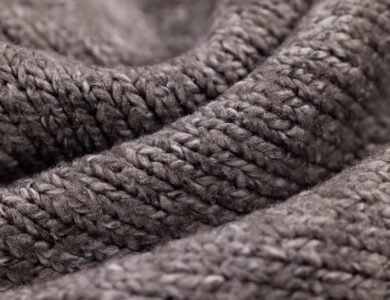
Look closely at yarn. High twist shows tight, defined spiral; low twist looks fluffy with many halo fibers sticking out. Fluffy halo in store means many free ends ready to pill.
2. Stretch and light density
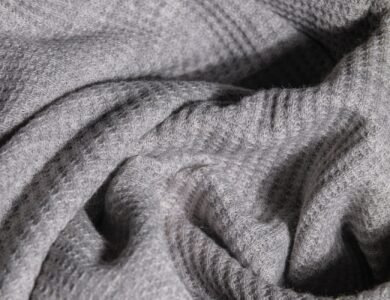
Hold to light and stretch 10%. Dense, even loops with minimal bright gaps indicate high cover factor and less movement. Loose, open knit with big gaps pills faster because yarns rub more.
3. Coated vs natural hand
Rub palm across surface. If it feels slightly waxy or overly slick and friction feels low, it may have silicone finish. If it feels naturally smooth but you can still feel individual yarn texture, it is more likely long staple and high twist without heavy coating.
- Yarn shows tight twist, little halo
- Dense loops, dim even glow under light
- Quick snap-back after stretch
- Long-staple listed or combed / worsted
- Fluffy halo, fibers stick out in store
- Bright pinholes when stretched 10%
- Slow recovery, holds stretch
- Very soft hand from low twist, short staple
Two-column comparison of low-risk vs high-risk knitwear cues for early pilling.
Care that extends anti-pill life
- Wash inside out cold, delicate, low spin. Heat and agitation are the main drivers of fiber escape.
- Skip fabric softener that coats and loosens fibers; use pH-neutral wool detergent at half dose.
- Air dry flat, reshape while damp. Tumble drying breaks fibers and accelerates pilling even if anti-pill finish was present.
- De-pill early with low-aggression stone or comb after first 2 washes to remove loose ends before they anchor into larger pills.
Longevity is staple plus twist plus density, finish is a bonus
Knitwear that resists pilling past 30 wears relies on long staple, higher twist, and dense loop structure first — anti-pill finishes only add a temporary smoothing layer that washes out after 10-25 cycles. If you buy for longevity, prioritize tight knit with quick recovery and defined twist over an ultra-soft low-twist hand that feels coated. That combination keeps surface fuzz low after the finish is gone, while a short-staple, loose knit will pill as soon as the coating fades regardless of brand claims.
Frequently Asked Questions
Does anti-pill finish wash out completely?
Resin and silicone types gradually wash out between 10 and 25 washes, after which pilling rate returns to base fiber behavior. Enzyme bio-polished yarns do not have a coating to wash out, so their benefit is permanent but limited to initial fuzz removal.
Is 100% wool more prone to pilling than wool-poly blends?
100% wool sheds pills more easily because there is no strong synthetic anchoring filament. Wool-poly blends often hold pills longer, so they look worse even if total fiber breakage is similar. For appearance, 100% long-staple wool with high twist often looks cleaner long term.
Can you restore anti-pill finish at home?
No true restoration, but you can slow future pilling by washing cold inside out, avoiding high heat, and removing early pills before they mat and anchor. Some fabric shavers include light silicone spray, but results are minimal compared to original mill finish.