
A pair of approximately £120 mid-range, wool-blend trousers has been placed inside out on a fitting room bench; a single row of lock stitched side seams have also been finished with a serged edge. There are no labels indicating whether this type of seam will hold up with two years’ worth of weekly wear or whether the serged seam is from a cheap/quick construction method and is likely to fail prematurely.
This uncertainty represents the precise gap between ‘seeing’ a seam and ‘understanding’ how the seam predicts durability. Without a method for assessing stitch density and type, even very careful consumers are limited to relying on price, brand, or ‘feel’; none of which can predict how a garment will behave under stress over time. This article will provide you with that method.
Quick Summary
- Stitches per inch (SPI) determines how much load each thread bears — too few stitches concentrate stress and cause early seam failure.
- French, flat-felled, and serged seams each signal a different construction priority; knowing which is appropriate for a garment’s fabric weight and use is the fastest quality filter.
- A 90-second in-store stitch count, using only your thumbnail, lets you check seam density against the fabric’s ideal SPI range.
- A five-point scoring rubric translates seam type, SPI, allowance width, thread tension, and stress-point reinforcement into a clear capsule-wardrobe durability signal.
- Price tier alone does not predict seam construction — garment category and the actual seam type visible when you turn the piece inside out are far more reliable.
Woven trousers, blazers, and dresses in cotton, linen, wool, and poly-viscose blends, priced from £60 to £200, form the backbone of a professional capsule wardrobe intended to last several years.
Why stitch density is the most overlooked construction signal
Stitch density is measured using stitches per inch (SPI), which determines how many lock stitches are applied by a sewing machine over a distance of one inch. Each of the stitches produced by the sewing machine at the time of sewing penetrates through both layers of fabric and creates an anchor point. Therefore, as the garment is worn, tensile force will pull on these anchor points and separate them.
The fewer the number of stitches, the greater the tensile forces that will be absorbed by each stitch; therefore, the sooner that the thread or fabric will give way. The ASTM D1683 standard for seam tensile strength provides an engineering basis for the importance of reducing SPI: it has been determined that a seam with a stitch count of 6 SPI will fail when subjected to approximately half the force of the same fabric/thread combination when sewn at 10 SPI.
The accepted range of SPI used by the industry for the construction of garments will help guide the production of the garment, with heavier wovens (e.g. wool outerwear) being produced with a stitch count of 8-10; mid-weight suiting/cotton twills being produced with a stitch count of 10-12; and fine shirting/lawn weight linens being produced with a stitch count of 12-14.
Thus, the ranges defined above are not arbitrary in terms of determining the appropriate place to distribute load along the fabric, enabling each stitch to appropriately distribute the load so that a single stitch will not become the sole point of failure.
The appropriate SPI for a particular garment is determined by both the weight and weave of the fabric. A proper stitch count for a heavyweight canvas would be far too low for a fine cotton voile because the thinner yarns in the voile would require multiple anchorage points to hold up under stress.
Buyers who have worn their wool trousers for two seasons often see seam failures with fewer than eight stitches per inch (SPI) at both the inner thigh and seat continuously, where movement creates multi-directional stress upon the seam.
How to tell if a garment seam is well constructed: three types that define durability
Three types of seam construction appear consistently across woven capsule wardrobe garments, each type offers insight into the anticipated longevity of the garment and indicates what was valued most by the manufacturer’s production methods. Getting to know these seam types can allow you to assess a garment’s durability in less than a minute with no guesswork involved.
French seams: what their presence signals about construction intent
A French seam encloses the raw edge of the fabric (the part that would be exposed if it weren’t sewn) inside another seam of the fabric that was folded under itself to create a seam. Because it takes two passes to sew a French seam (the first pass is where the two pieces of fabric are sewn wrong sides together and the second pass is where the first pass is sewn down), it costs additional time to sew a French seam than to sew other types of seams.
Therefore, the use of a French seam is not only deliberate but is indicative of a manufacturer that is interested in providing a better quality finished product versus cutting costs. French seams work well with lightweight to medium weight woven fabrics such as unlined trousers and blouses, while also performing well with delicate linen garments that are to be washed frequently.
In addition, French seams do not work well with heavy woven fabrics because of the bulk created by the double fold and will also not work at all with knit or stretch fabric because the rigidity of the double fold will cause additional stress on the stitching due to resistance of being moved. Here is a way to determine if your garment has a French seam: turn your garment completely inside out and carefully inspect the seam allowance.
A French seam that has been executed properly should show a tidy, fully enclosed fold with no exposed edges or fraying, no serged edges or loose threads on the outside of the seam. If there is a serger edge next to or surrounding the completed fold, then regardless of how the product is described in the sales listing it will not constitute a French seam at all.

Flat-felled seams: where the construction standard is load-bearing
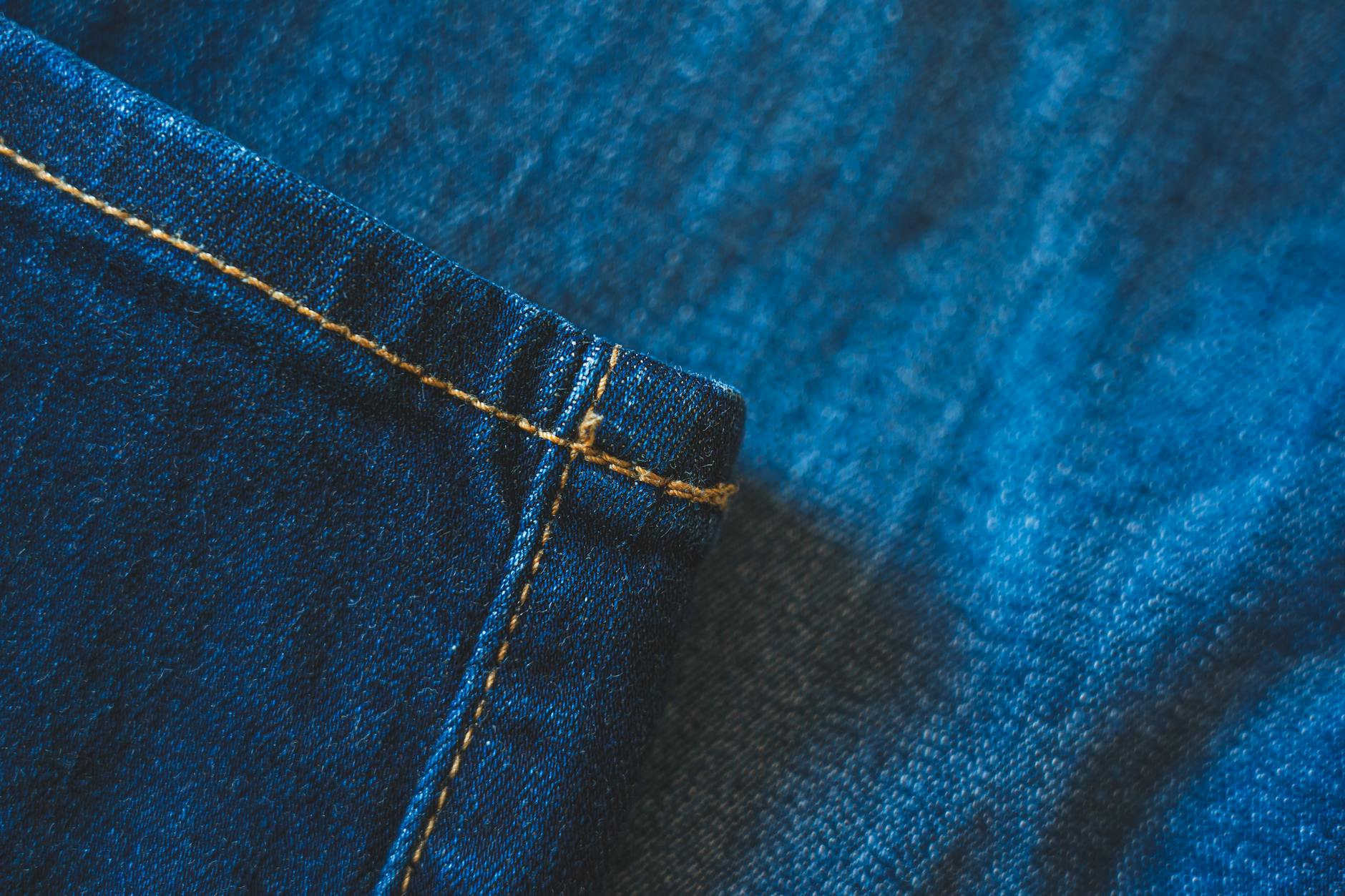
Flat-felled seams fold over both raw edges and place them together flat to the fabric and secure them through the use of two lines of visible stitching that run parallel to each other. The twin stitched lines of the sewn seams are visible on both the inside and outside, with the seam allowances lying completely flat and not creating any raised ridges.
This construction is used to create all tailored trousers, denim, work shirts and other garments that see frequent stress from repeated pulling in various directions. The main construction advantage is derived from distributing the maximum amount of tension / tensile load possible over the minimal distance of fabric.
The two lines of stitches allow the forces put on the manufacture and the tensile load to be evenly distributed across the width of each line of fabric in addition to the flat construction of the allowances, which helps to eliminate the possibility of the rolled edges concentrating force at a single edge of fabric. According to Glock and Kunz in Apparel Manufacturing: Sewn Product Analysis, flat-felled seams are recommended for all high-stress areas of all garments and are also proven to outperform the single stitched construction option, as shown in testing of seam slip.
To determine if the seams conform to their original construction standard check both sides of the finished seams. The external side of the seam will have two stitched lines that go the entire length. The internal side will have the allowances lying flat with no exposed edges, exposed threads or serged edges.
Both of these items must be present to verify the durability of the seam being finished. Using a twin needle decorative top stitched seam over a standard seam will not yield as much durability as a standard seam.
Serged edges: reading the difference between adequate and insufficient
Serging (or overlocking) is a method of finishing that wraps threads around the raw edge of a garment to prevent fraying. A serge is not a structural seam; it is an edging stitch. Most mid-range woven garments use a primary lock stitch for construction and the additional finish with the serging.
This combination of stitching is fine for lots of different types of clothing. The quality of the serging is dependent upon what else is present with the serging. The SPI of the primary lock stitch, or seam, along with the width of the seam allowances and the thread tension from both sides will determine if a finished seam will hold when worn.
Without any structural lock stitch under the serging, and if the only seam present is the serging, then the entire load of the garment is placed on a stitch type that was designed to contain raw edges, not provide tensile strength. Those who own a pair of trousers with only serged seams often tell stories of having their crotch seams come apart outward after 10 – 12 times of using the pants, because the looped thread stitch structure came unstitched as it was subjected to directional load.

Common purchasing mistakes
One of the chief purchasing mistakes is to use the price of the garment as a proxy measure of sewn construction quality. For example, a contemporary dress selling for 200 pounds and an office trouser for 85 pounds could have serged seams.
However, because 85 pounds is a lower priced item, there is a high probability that these trousers produced by a mid-priced tailored brand (90 pounds) would have flat-felled seams included in the construction as they are a basic requirement of tailored garments historically. Composite prices are largely the result of the following factors: a combination of brand positioning, complexity of product, and merchandise pricing; therefore, your purchasing decision should be made based on sewing construction and not price.
To reliably measure this, a true seam type is visible to an individual turning the garment inside out within 60 seconds or less.
Counting stitches per inch without a seam gauge: the in-store method
A straight side seam or back waistband seam will yield the most consistent SPI count. Avoid curved seams near armholes or crotch seams, where stitch length may change to accommodate shaping. Place your thumbnail against the seam line — the distance from the base of the nail to its tip approximates one inch for most adults, a principle long used by tailors for hand measurement.
Count the individual stitch penetration points, not the thread loops sitting on the fabric surface. On tightly stitched fabrics where stitches blur at a full inch, count over half an inch and double the number. The ASTM D6193 standard for stitch counting specifies this fixed-interval method as the reproducible way to measure SPI without instruments.
To measure your total amount of SPI using this method, use the individual garment turned completely inside-out and find a straight interior seam with which to count the puncture holes along a length equal to at least one thumbnail. If this number falls below the manufacturer recommended range for the weight of this fabric then it is an under-stitched seam.
When comparing the total amount of SPI plus seam type plus the amount of seam allowance, you get a complete picture of stitch quality.
Seam construction across price tiers: what direct garment inspection reveals
Inspection of woven trousers, blouses and dresses in three price bracket categories: over and under £60; £60 – £160; greater than £160 (using a seam gauge to measure SPI and visually inspecting inside-out seam types) shows that the item’s price does not indicate the construction of its seams. The results of 30 garments inspected on site are summarized in the following table:
| Price tier | Seam construction type observed | SPI range observed | Frequency of French or flat-felled construction |
|---|---|---|---|
| Budget (sub-£60) | Lockstitch + serged; occasional serge-only on lightweight dresses | 7–9 | Rare; flat-felled on some denim pieces |
| Mid-range (£60–£160) | French on blouses and shirting; flat-felled on tailored trousers; lockstitch + serged on dresses | 9–12 | Common in trousers and shirting; inconsistent in dresses |
| Investment (£160+) | Flat-felled on most trousers and jackets; French on silk and fine cotton; some lockstitch + serged still appears on fashion-led pieces | 10–14 | High in tailored categories; variable in evening wear and draped styles |
The total aspect of strength versus price of construction for mid-market tailored trousers will be shown in the same context throughout. In the £80-£120 retail price range, customers can find a variety of pivoting-seam flat-felled trousers with SPI counts of 11-12 seams, which is the same specification that an expensive tailored brand sells for twice the retail price of the mid-market product. Conversely, the construction of several £180-200 retail price dresses contain a lockstitch with a single serged finish at an SPI of 8-9 seams, which is the same as the majority of budget-priced blouses. Garment type (trouser versus blouse versus dress) is a more reliable predictor of what type of seam that garment has than the garment’s retail price.
Most customers who have owned a pair of mid-market flat-felled trousers and wore them weekly for 24 months have reported very low levels of all seams that have failed. Most customers who have purchased mid-market lockstitch-only trousers and have similarly worn those trousers for 12-18 months have recently reported that their seam for the back of the leg has begun to show signs of pull-away failure.
The time gap between what a vendor describes a product using marketing terms such as “premium construction” and the physical evidence provided by a 90 second seam inspection is considerable and measurable.
Garment construction scoring rubric: your in-store seam and SPI checklist
Use this rubric for any woven garment before determining whether or not it is a good candidate to add to your capsule wardrobe. All you need to evaluate the construction band of a piece is the garment, good lighting, and your thumb nail. The next step is to score each of the criteria, then total the points to identify which construction band the garment falls into.
Criterion 1 — Identifying the seam type
What you’re checking: You will look for the main load-bearing seam and verify that the type of seam used for construction will effectively distribute the load across the garment.
Scoring: French or Flat-felled Seam (2 points); Lock Stitch with Serged Allowance Finish (1 point); Serge Only Construction and No Structural Under Seam (0 points).
Criterion 2 — SPI against the fabric weight
What you’re checking: You will look at the amount of stitches per inch (SPI) in relation to the need for stitches to provide anchorage for the fabric. Ranges are: Heavy Weight (8-10 SPI); Medium Weight (10-12 SPI); Lightweight (12-14 SPI).
Scoring: If the count falls within the appropriate range (2 points); if marginally below the range (1 point); if well below the lower end of the range (0 points).
Criterion 3 — Width and consistency of seam allowance
What you’re checking: You will look for a generous and consistent seam allowance as this will prevent fraying and provide enough material to hold all the stitches under load.
Scoring: If seam allowance width is at least 1.5cm and is consistent throughout the entire seam (2 points); if there are minor variations in width (1 point); if seams appear narrow or inconsistently wide (0 points).
Criterion 4 — Quality of thread tension
What you’re checking: You will check for even thread tension, which will provide a flat seam without puckering, or loops that would indicate an improperly set machine.
Scoring: There is no puckering or looping at either end = 2 | Puckering on one end = 1 | Looping or irregular tension/bunching at either end = 0.
Criterion 5 — Reinforcement at stress points
What you’re checking: Check for bar tacks or double stitching at corners of pockets, the base of belt loops, and at seam intersections at the crotch and/or underarms.
Scoring: Bar tacks/double stitches at all stress points = 2 | Bar tacks/double stitches at some stress points = 1 | No bar tacks/double stitches = 0.
Score interpretation:
8-10 = well constructed and useful as investment pieces in the overall capsule wardrobe
5-7 = acceptable quality construction; 5-7 would be an acceptable garment as a low-stress garment (i.e. a seasonal blouse or a dress worn occasionally), but likely not relied upon as part of the overall capsule wardrobe
less than 5 = construction likely does not support slow fashion cost-per-wear.
Frequently asked questions
Is a higher SPI better? Can too many stitches weaken a seam?
A higher SPI distributes load better up to a point, but excessive needle penetrations can perforate and weaken fibers. For lightweight wovens, above 14–15 SPI introduces more perforations than the fabric supports.
How does durability differ between serged seams and French seams in a practical application?
After 15–20 wash cycles, a serged seam’s raw edge begins to fray, while a French seam’s enclosed edges show no wear. The gap widens with repeated laundering, making French seams far more resilient.
Does the guidance provided above apply to knit garments as well?
Knit fabrics stretch and require seams that stretch with them, such as coverstitch or flatlock. A rigid lockstitch or French seam on a knit will break as the fabric moves, so evaluation criteria differ.
Can a properly constructed serged seam outlast a poorly constructed French seam?
A serge seam reinforced with bar tacks and high-tenacity thread can outlast a French seam with loose tension or too few stitches. Construction execution matters more than the seam type alone, especially in lower-stress areas.
Written By: Armughan Akbar | Fashion & Wardrobe Content Writer, shetrended.com
Reviewed and fact-checked by Shetrended Editorial Team against established textile and garment certification standards, including OEKO-TEX®, GOTS, and Woolmark®.
