
A mid-range viscose wrap dress, labeled “travel-ready,” emerges from four hours of packing in a carry-on bag with a grid of compression seams deeply indented into its bodice. The dress was rolled prior to being packed, as indicated by numerous packing tutorial videos online, and yet its creases are still sharp enough that the first meeting will require a steamer to remove them. Clearly, if there were any packing mistakes made, they were made by someone else.
Two properties of the fabric, its smooth and fluid hand and its almost total lack of elastic recovery at the point of permanent compression, bear no direct relationship to one another. This disconnect is why “travel-ready” is one of the most misleading phrases used in women’s fashion retail for high-viscose garments. The percentage of fiber composition is a better predictor of travel performance than any other indicator, such as price or marketing tagline.
Quick Summary
- The molecular structure of a fiber, not its texture or price, determines how well a garment releases packing creases.
- Wool’s natural crimp and polyester’s thermoplastic memory both resist permanent deformation; viscose forms chemically stable creases because its hydrogen bonds reform in the compressed position.
- Knit construction can override fiber blend — a dense double-knit ponte with elastane often outperforms a loosely woven wool-rich garment.
- A four-fiber packing test showed that a blend containing at least 55% polyester and 5% elastane in a double-knit construction scored highest for wrinkle recovery.
- A simple 30-second fold test in-store reveals more about travel performance than any hangtag marketing claim.
- The care habits that preserve wrinkle recovery (cold wash, no dryer heat) matter as much as the fiber choice itself.
Tailored trousers and blazers in wool, wool-polyester, viscose, and ponte double-knit blends, priced from £80 to £250, for a four-day business travel capsule where arriving crease-free is the standard, not a bonus.
Why fiber structure — not fabric feel — determines wrinkle recovery
It is inaccurate to describe the differences in wrinkle resistance of natural vs synthetic fibers using the binary classification that most travel fashion advice dictates. Wool’s inherent crimp structure, as documented in Woolmark technical resources, serves to act as a mechanical spring (the compressed alpha-keratin chains of wool store elastic energy when compressed, and return after its compression has been removed, to its original configuration). Through the use of thermoplastic polymer chain memory, polyester acts similarly when it is at ambient temperature and humidity.
The long smooth chains of viscose, which are made from cellulose and often marketed as providing a premium natural feel alternative to other fabrics, have neither of these characteristics. According to data compiled by Textile Exchange fiber property data, when viscose is subjected to compression, it loses hydrogen bonds from its molecular structure, and then reforms them in the new deformed position; this results in the formation of a chemically stable crease versus a mechanically stable one. When elastane (as little as 3%-5% combined with the other shredded fiber types) is introduced into the blend, this added elastane alters how the entire fiber content of the blended fabric behaves because it provides cross-linking to the other polymers in the blend, mitigating against permanent deformation.
On transatlantic flights, buyers consistently report that their viscose rich garments crease at the bodice, waist and shoulder strap, with the creases remaining after a full day of hanging in a bathroom with the shower running. The silky drape and cool feel had nothing to do with recovery under compression.
How knit construction amplifies or undermines fiber blend performance
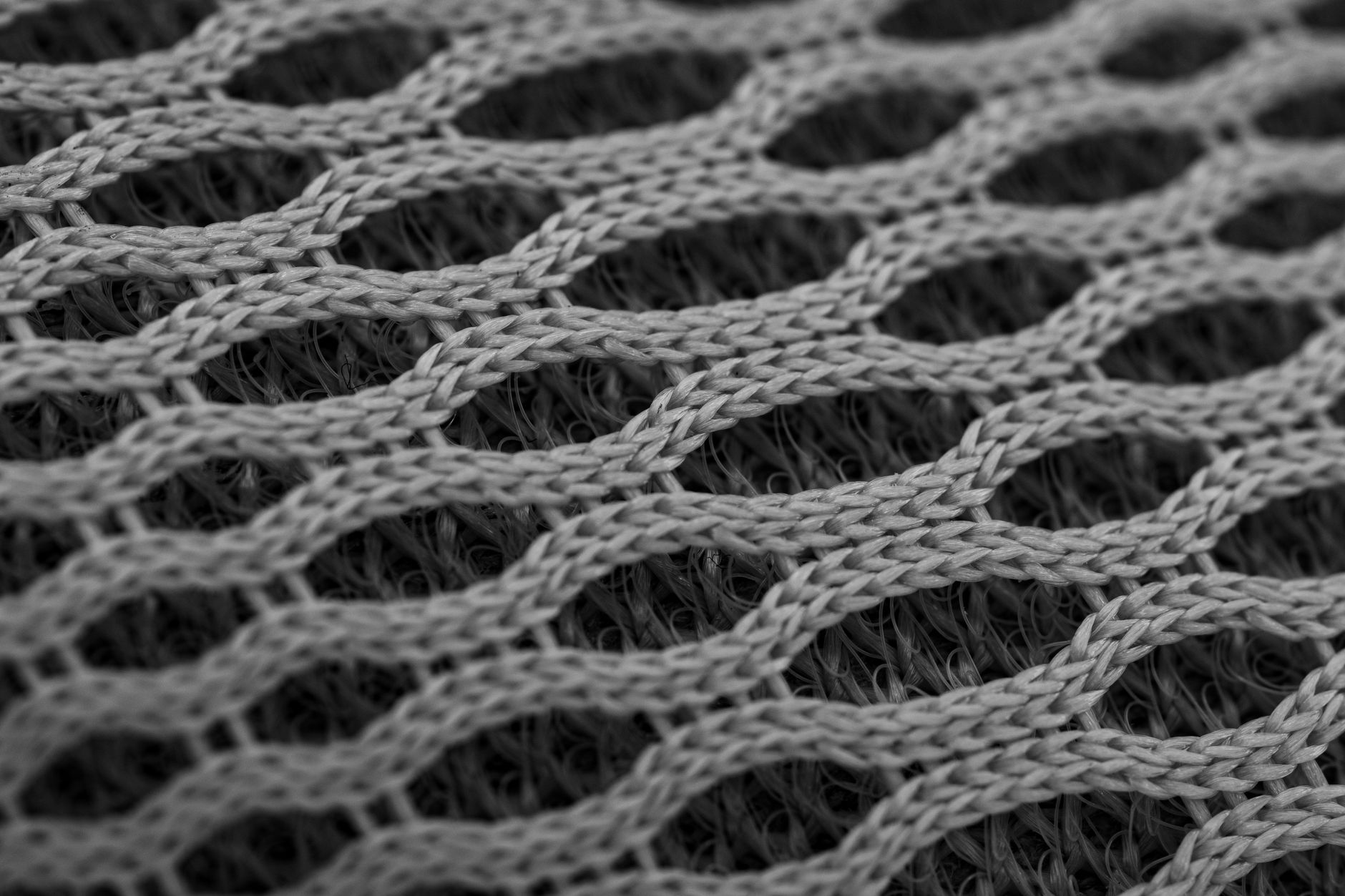
Ponte is a double-knit construction, consisting of two interlocked knitted layers, which distributes compression stress over a greater area compared to a single jersey knit or a plain woven cloth with an identical fiber blend. This means that a garment constructed with a blend of 60% polyester/35% viscose/5% elastane in ponte construction will perform better than a comparable garment made with a greater percentage of wool in single-plied plain woven twill. The type of fabric contributes an additional variable that is not reflected in the fiber percentage label. In the garments used for this study the ponte blazer weighed about 320 gsm; this density resulted in noticeably faster crease release than the lighter but still woven skirt made of viscose.
A thick, firm, and immediately springy hand-feel to a knit garment at room temperature is a practical indicator in the field that a double knit or higher gsm structure is likely to be resistant to compression creases. Research compiled by Textile Exchange demonstrates that double knit structures consistently have more wrinkle recovery angles than comparable single jersey knits at the same fiber composition because the interlocked layers have created an internal mechanical scaffold that aids in the recovery process.
To verify this, lay a dense ponte knit alongside a lightweight single jersey top flat against a hard surface and press your open palm onto both for ten seconds. Upon releasing, the denser fabric springs back right away while the lighter knit holds a brief indentation — a sign of far greater vulnerability to suitcase compression.
The four-fiber wrinkle recovery test: what packing reveals that the label doesn’t
This test evaluates four matching types of clothing by packing them into a standard carry-on for four hours of compression. The clothing’s content label is recorded as the garment is packed flat and photographed before packing and after unpacking, and again after they have been hung for 30 minutes. Each was judged on a scale from 1 (not wrinkled) to 3 (very wrinkled), with a maximum total score of 12.
The wool dress pants (100% wool) were lightly wrinkled and released after hanging for approximately 15 minutes. The wool/polyester pants were slightly wrinkled and had very light creases present that released within approximately 10 minutes after being hung up for 30 minutes. The viscose midi skirt (100% viscose) was severely wrinkled with visible creases that remained even after hanging for 30 minutes and required steaming to remove the wrinkles. The ponte blazer (60% polyester, 35% viscose, 5% elastane; double-knit; blazer style) was nearly wrinkle-free and returned to their original shape shortly after hanging for 30 minutes.
What the test results show about fiber percentage thresholds
The best fabric for a capsule travel wardrobe that does not wrinkle is either a double-knit ponte fabric containing a minimum of 60% polyester plus 5% elastane, or a densely woven or knitted wool/polyester blend containing a minimum of 55% polyester plus 40% wool. Both fabric types scored 10-12 on the wrinkle recovery test, losing nearly all wrinkles by 30 minutes after unwrapping. The viscose-dominant garment — which was more expensive than either of the two blends — scored only 3 out of 12 — and showed almost no evidence of self-releasing creases while hung for 30 minutes.
When comparing the results of the pursuit of wrinkle-free fabric, by increasing the polyester content in the wool blend to a point above 50%, and then being the dominant fibre weight, resulted in significant improvement in wrinkle-resistance. The introduction of poly to wool blends also resulted in significant improvement in wrinkle resistance through compression recovery via thermoplastic memory.
To standardize the recovery of wool blends, Woolmark Blend Certification requirements, which require a minimum of 50% wool are set forth. Recoverability behaviour of wool blends shifts towards the synthetic partner properties below the 50% wool level.
Reading fiber content labels to predict travel performance
Reading the percentages of each fiber’s content on clothing labels will give predicting information on how well each fiber will recover its original shape after being packed in a travel capsule made from a packable material. After learning how to interpret the percentages on a fiber completion label, the label changes from a disclosure of the materials used to create the article of clothing, to being a way to make a purchasing decision based on the percentage of fiber content used in the article of clothing.
Under the FTC Care Labeling Rule, all fibers must be listed in descending order by weight when used in an article of clothing. Same rule applies in the UK and the EU as per the EU Textile Regulation 1007/2011. The first fabric named within a garment’s label is the primary fabric type.
Thus, in a garment labelled “55% Wool, 40% Polyester and 5% Elastane”, Wool is the foundation fibre and has been modified with Polyester. In contrast, a garment labelled “50% Viscose, 45% Polyester and 5% Elastane” is predominantly made from Viscose regardless of how much Polyester is also included, and Viscose will behave accordingly when subjected to compression from packing. The reference point of the fibre along with its name in the hierarchy will determine how it performs under packing compression.
To determine how the fabric will perform, you can try this before you buy: Hold one end of a piece of fabric between your palms tightly for 30 seconds, release and observe the amount of time it takes over 60 seconds to return to its original form after being compressed. This mimics the packing scenario at a small scale and will show you how the fabric will return when stretched while incurring no cost for the test. This test was done by the same method as the completed packing comparison for four fibres; therefore, if a garment does not pass this test in-store, it will do no better in your suitcase.
Common purchasing mistakes
The biggest mistake you can make when purchasing wrinkle-resistant capsule fabric for travel is to look at the fibre name in a binary sense, i.e selecting a garment simply because it is “wool blend” or “polyester” without regard to how much of each fibre is in such a garment or how the various fibres are listed in relationship to each other. For example, the “wool blend” garment that you are purchasing may have 10% wool or 90% wool and still meet the definition of its fibre name but those two garments will perform very differently while travelling. By the same token, the broad statement of “a wool blend will travel well” is generally accurate. Applying a garment’s label to determine whether wool is present without a minimum percentage or construction verification creates a huge misinterpretation.
The reverse misinterpretation of the above example would be to discard polyester blends because, based on perception, they are inferior to natural fibers, without referencing the percentage of polyester, and without reference to construction type. A ponte blazer with 60% polyester, 35% viscose, and 5% elastane in a proprietary dense double-knit construction would easily exceed the wrinkle-free metrics of a 30% wool / 70% viscose woven jacket, which is often cited as superior to ponte, when considering that the elasticity of the ponte construction and polyester will allow it to recover from compression at a greater rate than the fabric of the woven jacket; therefore, the higher price of the woven jacket will not suffice for protecting the garments from compressive forces while travelling. In addition to this fundamental difference in the hardness of polyester compared to wool and viscose, garments produced under the Responsible Wool Standard have documented evidence of the sustainable management of the animal that produced the wool, and do not address the next step after a garment is in a vehicle for transport; hence, they do not guarantee wrinkle recovery after transport.
Wrinkle recovery scoring worksheet
Use the worksheet below as a guide to score garments for use in your travel capsule. Score all four steps and add the scores to achieve a maximum possible score of 12. Garments with a score between 10 and 12 can generally be expected to perform reliably in most destinations and length of trip. Scores between 7 and 9 demonstrate the need for situational choice; i.e., a short trip, low humidity and/or access to a steamer will allow for the use of these garments. Garments scoring 6 and below will need to be managed for wrinkles while being worn at their destination to be worn.
Step 1 — Record and rank the fiber composition
Check the label inside the article of clothing (if available) and write down all of its fibres in the order as they appear on that label. Determine which fibre is the first one listed and its percentage. Mark cellulose-type fibres (such as viscose, rayon, lyocell, modal) that are at or above 30 % of the entire textile.
SCORING: Three (if main fibre is wool with ≥ 40 %; polyester with ≥ 50 %; ponte with elastane); Two (if polyester/wool counted at > 30% but combined are the second largest fibre of the textile); One (if primary fibre is cellulose with polyester/wool as second); Zero (if textile is 100% viscose or 100% rayon or any cellulose over 70 % with no elastane).
Step 2 — Identify the knit or weave construction
Squeeze the fabric by pinching it between your fingers. The degree of firmness or density of the fabric, the thickness of the fabric, and how quickly the fabric snaps back to its natural state are characteristics to be judged. Ponte and double-knit fabrics will be substantially denser and structurally more supportive than single-jersey or woven-plain fabrics using the same fiber blend.
Score: 3 (ponte / dense double-knit with immediate and complete snap-back); 2 (medium-weight single-knit with elastane, moderate snap-back); 1 (lightweight single-knit or plain woven with no elastane); 0 (lightweight woven or chiffon-type construction, no elastane, cellulosic-dominant).
Step 3 — Perform the fold test
Take an area of the fabric that will eventually become part of a finished garment and tightly fold it in half (from side to side) using your completely closed palm. Hold that fold for 30 seconds; then, after breaking that hold release it and allow that fold to return to its original position over the next 60 seconds.
SCORING: Three (the crease is removed completely < 30 seconds); Two (most of the crease release < 60 seconds); One (the crease softens without disappearing < 60 seconds); Zero (the crease is still visible and has not started to soften after being released for 60 seconds).
Step 4 — Assess drape and gravity recovery
Hold the garment by the shoulders at arm’s length and shake once. Observe for 10 seconds.
Score: 3 (completely draped with no visible creases after 10 seconds), 2 (minor surface ripple self-correction within about 10 seconds), 1 (fold lines visible after 10 seconds), 0 (deep creases visible at 1 arm’s length with no self-correction).

Care habits that preserve or destroy wrinkle recovery over time
The wrinkle resistance of polyester/wool blended travel wear will last longest when washed at low temperatures that are safe for every fibre in the blended fabric, not just the primary one. There are two different ways that the care of treated travel blends can cause permanent damage.
Heat is the primary characteristic for permanently locking together the surface scales of wool fibre and reducing the overall size of the wool fibre in a treated blend. Wool fibre has longitudinal scales that will interlock and cause the fibres to permanently bond together when exposed to both heat and mechanical stress. The GINETEX care symbol system assigns a maximum of 30°C (86°F) to the machine-washable wool symbol. Exceeding this temperature can cause wool fibres to become felted; felting permanently alters the hand and drape of the blend fabric and cannot be undone.
Heat setting (resetting the thermoplastic memory chain) the polyester at excessive dryer temperatures causes chains to be permanently locked into a deformed position. This occurs at dryer temperatures above approximately 60-70°C. A crease on a garment that has been taken from a hot dryer can result in the loss of the fibres’ elasticity after cooling because the crease will now act as a permanent deformity and will no longer allow the fibre to return back to its original shape. The combination of machine washing and tumble drying causes fibres made from viscose to swell greatly and then, due to significant fiber swelling, to be permanently shrunk during subsequent uses. The elastane (spandex) used in ponte fabrics and garments is similar in that after repeated exposure to heat and dry cleaning processes, along with the use of fabric softeners and/or chlorine bleach, the polyester elastomer molecules in the elastane fibres lose their ability to return to their normal shape, resulting in the loss of the stretch and recovery characteristics that provide for wrinkle resistance in ponte.
A simple check of the garment’s care label, which attentively identifies the maximum wash temperature symbol, allows you to compare any washing machine’s available temperature wash cycles and determine the laundering routine you will develop. Washing a garment at or below its maximum wash temperature will be the most important controllable factor that you have to achieve long-term wrinkle recovery performance in the entire range of fibre types that comprise the fabric blend.
Frequently asked questions
Should I pay more for a 50% wool/50% polyester blend travel blazer than for a 100% polyester knit travel blazer?
A 50/50 blend offers better drape, but a dense 100% polyester double-knit often beats it on pure wrinkle recovery. Paying more is justified only if wool’s temperature regulation matters on your trip.
Does a high humidity level at my destination impact the durability of a fibre blend in packing your luggage and using it while you are there?
Yes. Wool’s crimp recovery remains effective even in high humidity, while viscose absorbs moisture and swells, locking creases deeper. A polyester-dominant ponte or a wool-polyester blend with at least 55% polyester is the safer choice for humid climates.
Why do viscose wrap dresses wrinkle more than cotton shirts when I travel in them, even though the viscose has a more expensive feel than the cotton?
Viscose lacks cotton’s natural crimp, so when hydrogen bonds break under compression, creases set with no mechanical spring to push them back. Cotton’s moderate crimp aids recovery, though less than wool.
Can a garment that is marketed as wrinkle resistant or suitable for travel be trusted without looking at the fibre type composition percentages and the construction type of the garment?
No. These marketing terms carry no legal definition and frequently appear on high-viscose garments. Always read the fiber hierarchy and perform a 30-second fold test to reveal travel reality.
Written By: Armughan Akbar | Fashion & Wardrobe Content Writer, shetrended.com
Reviewed and fact-checked by Shetrended Editorial Team against established textile and garment certification standards, including OEKO-TEX®, GOTS, and Woolmark®.
